
As the first hint of chill settles in the air, there’s nothing quite like curling up with a steaming bowl of comfort. Enter my 15-Minute Korean Beef Bulgogi Stew with Glass Noodles – a delightful transformation of leftover bulgogi into a hearty, one-pot meal that’s perfect for those cozy evenings. With tender beef mingling beautifully with chewy glass noodles and enoki mushrooms in a rich, savory broth, this dish not only satisfies your taste buds but also wraps you in warmth. It’s an effortless way to create a delicious dinner in under 30 minutes, making it a lifesaver for hectic weeknights. Plus, it’s a fantastic way to reduce food waste, bringing new life to those flavorful leftovers! Ready to dive into this tasty bowl of goodness and see how easy homemade meals can be? Let’s get started!
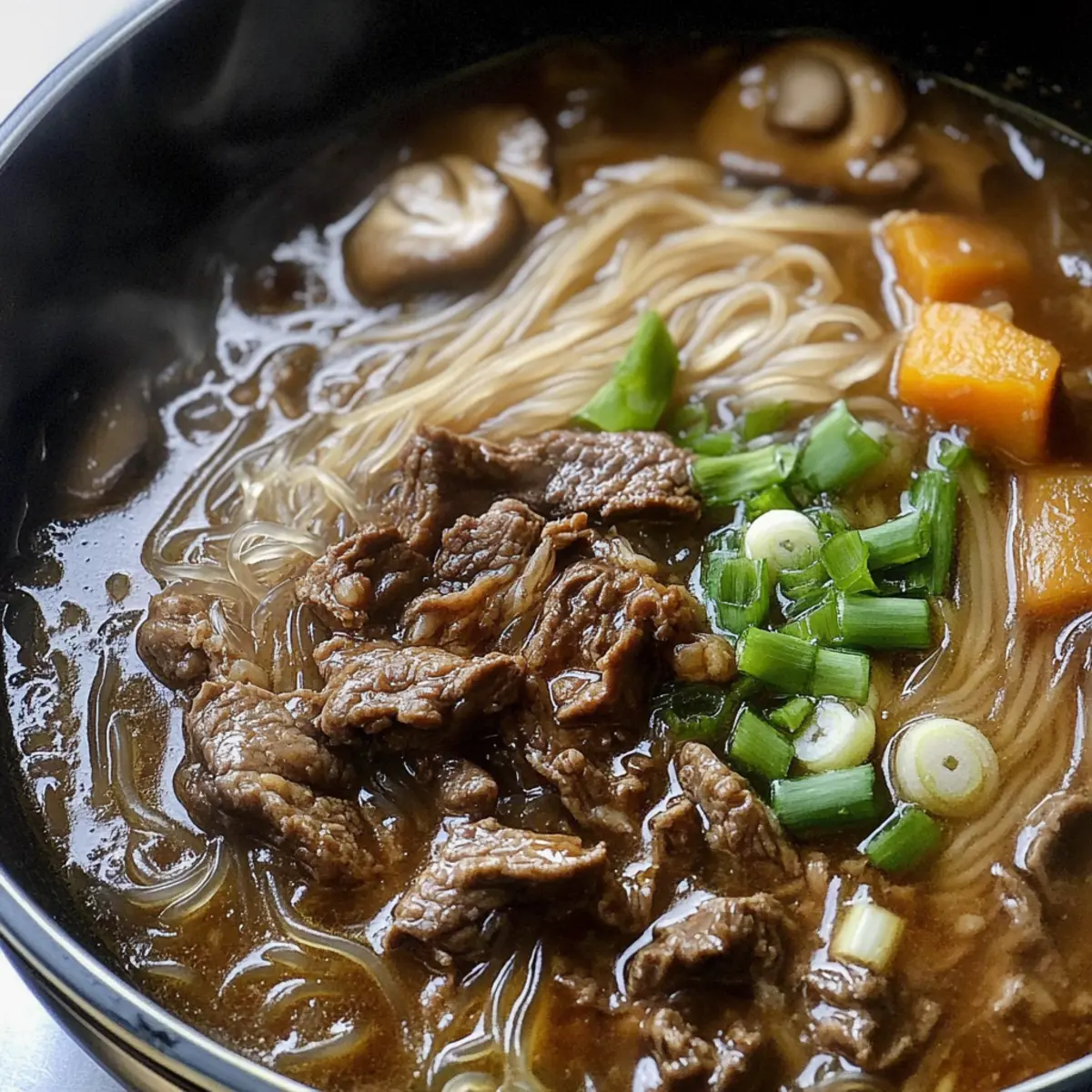
Why make Korean Beef Bulgogi Stew?
Quick and easy: With just 15 minutes of your time, this stew transforms last night’s bulgogi into a delicious one-pot meal that’s as simple as it is satisfying.
Rich flavors: The combination of tender beef, sweet potato glass noodles, and earthy enoki mushrooms creates a deep and savory broth that warms the soul.
Versatile ingredient options: Whether you opt for Crock Pot Beef or customize with extra vegetables, the possibilities are endless!
Perfect for leftovers: This dish champions resourcefulness, allowing you to repurpose leftovers into something entirely new and exciting.
Crowd-pleaser: Great for family dinners or cozy gatherings, everyone will love this comforting bowl, providing you with a standout meal that impresses.
Korean Beef Bulgogi Stew Ingredients
Get ready to savor this comforting dish!
For the Stew
- Korean Beef Bulgogi – Using flavorful leftover bulgogi adds depth to your Korean Beef Bulgogi Stew.
- Sweet Potato Glass Noodles (Dangmyeon) – These chewy noodles absorb the savory broth perfectly without getting mushy.
- Enoki Mushrooms – Their earthy flavor and unique texture enhance the stew’s overall profile.
- Green Onion – This adds a bright, fresh touch as a garnish, uplifting the dish’s appearance.
- Water – Acts as the broth base; swap in beef stock for a richer flavor experience.
- Sesame Oil – Provides a delightful nutty depth, enhancing the comfort of the stew.
- Soy Sauce – Contributes essential umami and sweetness to balance the rich flavors of bulgogi.
Prepare to indulge in a warm bowl of Korean Beef Bulgogi Stew that’s both quick and delicious!
Step‑by‑Step Instructions for Korean Beef Bulgogi Stew
Step 1: Soak the Glass Noodles
Begin by soaking the sweet potato glass noodles in warm water for about 15 minutes. This ensures they will soften and become tender while absorbing the flavors of the stew. Stir occasionally to prevent any sticking, then drain and set aside to prepare for the delicious Korean Beef Bulgogi Stew.
Step 2: Warm the Bulgogi
In a medium pot, heat over medium heat for 2-3 minutes until hot. Add your leftover Korean beef bulgogi and stir gently to warm it up, allowing the flavorful juices to release. Keep an eye on it, stirring often to ensure it doesn’t stick to the bottom, about 3-5 minutes.
Step 3: Add Flavorful Sauces
Once the bulgogi is heated through, stir in the dark soy sauce and sesame oil, mixing thoroughly for another minute to combine all the delicious flavors. This will form the base for your stew, enhancing the richness of the bulgogi as it integrates into the broth.
Step 4: Build the Broth
Pour in four cups of water (or beef stock for extra depth) into the pot and increase the heat to high. Bring the mixture to a gentle boil while stirring occasionally, which should take about 3-5 minutes. You’ll know it’s ready when large bubbles start to form on the surface, signaling that it’s bubbling nicely.
Step 5: Incorporate Noodles and Mushrooms
Once boiling, add the soaked glass noodles and enoki mushrooms to the pot. Stir well and let them cook for 2-3 minutes, allowing the noodles to absorb the savory broth while becoming tender. The mushrooms should soften slightly, adding their earthy flavors to the Korean Beef Bulgogi Stew.
Step 6: Finish and Serve
After 2-3 minutes, remove the pot from heat. Ladle the steaming stew into bowls and garnish with freshly chopped green onion for a pop of color and flavor. Serve immediately, and savor the comforting warmth of your Korean Beef Bulgogi Stew, ideal for cozy gatherings or weeknight dinners.
Make Ahead Options
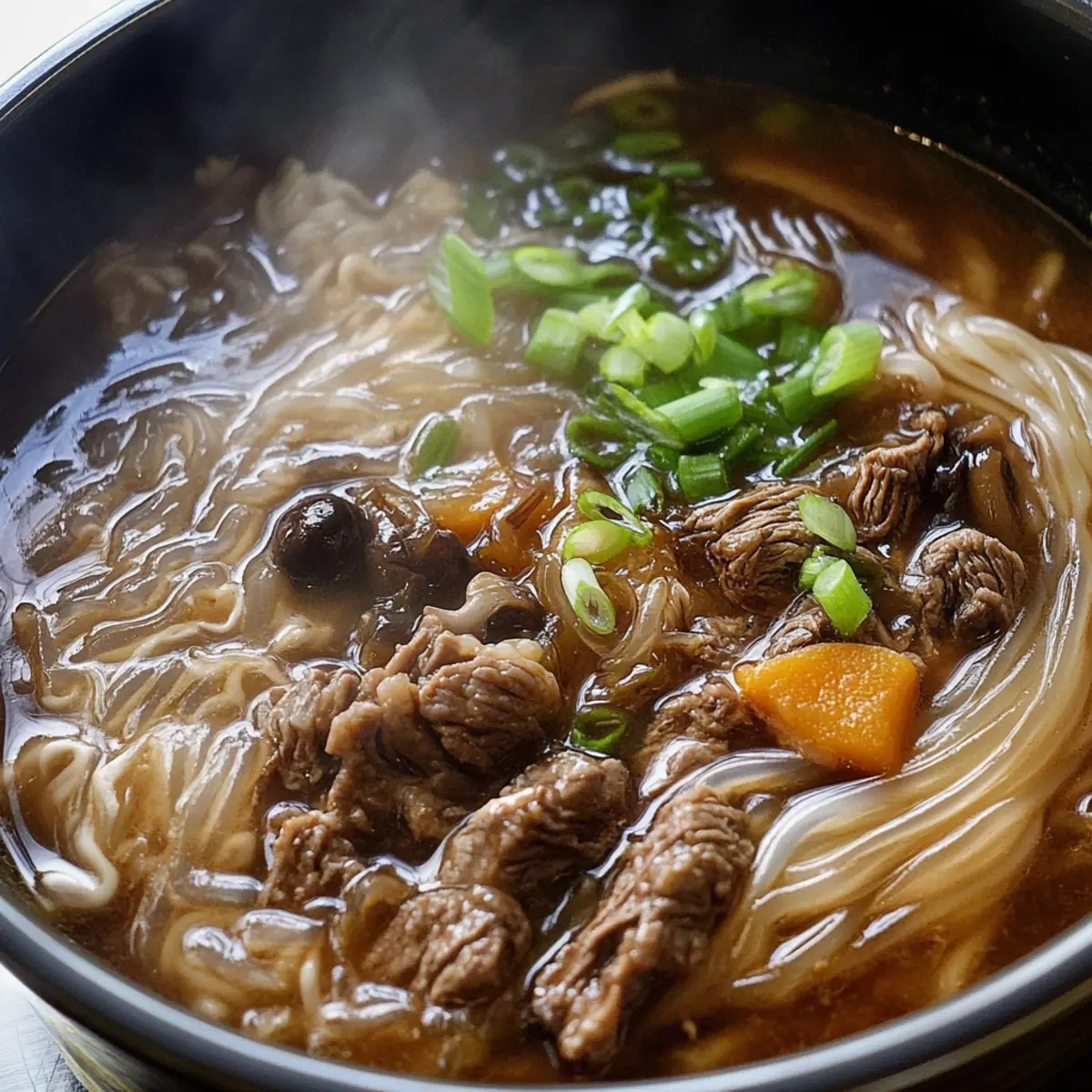
These Korean Beef Bulgogi Stew preparations are perfect for busy home cooks seeking to save time! You can prep the sweet potato glass noodles by soaking them in warm water for up to 24 hours in advance. The leftover bulgogi can also be fully cooked and stored in an airtight container in the fridge for up to 3 days. When you’re ready to serve, simply warm the bulgogi over medium heat, add water or beef stock, and bring to a boil. Stir in the soaked glass noodles and enoki mushrooms, cooking just until everything is heated through, ensuring that the dish retains its delicious flavors and comforting texture. With these make-ahead steps, you can enjoy a hearty Korean Beef Bulgogi Stew without the last-minute rush!
What to Serve with Korean Beef Bulgogi Stew
There’s nothing like rounding out your meal with delightful sides that perfectly complement the flavors of your stew.
-
Steamed Rice: This classic side absorbs the savory broth and balances the rich flavors, perfect for sopping up every last bite.
-
Kimchi: The spicy, tangy crunch of traditional kimchi adds a refreshing contrast that enhances each spoonful of the stew.
-
Pickled Vegetables: A colorful medley of pickled radish or cucumbers introduces brightness and acidity, cutting through the stew’s richness.
-
Asian Slaw: A crunchy slaw made with cabbage, carrots, and a sesame dressing is refreshing and brings a delightful texture to the meal.
-
Miso Soup: A warm bowl of miso soup provides a gentle umami flavor that pairs beautifully with the hearty beef stew.
-
Sesame Spinach Salad: This quick salad delivers fresh greens tossed in sesame oil and soy sauce, offering a light counterpart that complements the stew.
-
Shiitake Mushroom Spring Rolls: Crispy spring rolls filled with shiitake mushrooms provide a delightful crunch and extra umami, harmonizing beautifully with the stew’s flavors.
-
Soju or Japanese Beer: For drinks, a chilled glass of soju or a light Japanese beer perfectly complements the savory notes, elevating your dining experience.
Korean Beef Bulgogi Stew Variations
Feel free to explore these tasty twists that can elevate your Korean Beef Bulgogi Stew experience, adding new dimensions to this comfort food classic.
-
Marinated Fresh Beef: Swap the leftover bulgogi for marinated fresh beef to create a flavor-packed stew from scratch. This alternative is perfect for those who want a fresher taste!
-
Different Noodles: Use rice noodles, udon, or ramen for a new texture and taste experience. Each type adds its unique charm, making the dish versatile and exciting.
-
Spicy Kick: Add some gochujang (Korean chili paste) to the broth for a spicy heat that can take comfort to a whole new level. A little goes a long way to ignite those taste buds!
-
Veggie Boost: Toss in bok choy, napo cabbage, or carrots for an extra burst of color and nutrition. These vegetables not only add vibrant hues but also enhance the stew’s flavor profile.
-
Beef Stock Upgrade: Replace the water with beef stock for an incredibly rich and hearty broth. This simple switch will intensify the savory aspects of the stew.
-
Mushroom Medley: Expand on the enoki mushrooms by adding shiitake or button mushrooms. Different mushrooms bring varying textures and earthy flavors that elevate your stew.
-
Vegan Delight: For a plant-based twist, substitute the bulgogi with tofu or seitan and rely on vegetable broth in place of beef stock. It’s an enjoyable option that delivers great taste without sacrificing comfort.
-
Noodle Doodle: If you’re feeling experimental, try a mix of colors and flavors with sweet potato noodles and soba noodles for a fun twist to the traditional recipe. You’ll be amazed at how these variations can change the dish!
Exploring these variations not only keeps your meals exciting but also allows you to adapt the dish to your pantry staples. If you’re looking for more flavor inspirations, try incorporating ideas from my favorite Crock Pot Beef recipes for bold flavors!
Expert Tips for Korean Beef Bulgogi Stew
-
Use Fresh Bulgogi: If you don’t have leftovers, marinate fresh beef overnight for the best flavor. A little prep can enhance your Korean Beef Bulgogi Stew dramatically.
-
Monitor Noodle Soaking: Soak glass noodles for at least 15 minutes but no more than 30 minutes. Over-soaking can make them too soft, leading to a mushy texture in your stew.
-
Broth Variations: For a richer taste, use beef stock instead of water. This simple switch can elevate your Korean Beef Bulgogi Stew to new heights of flavor.
-
Add Extra Veggies: Feel free to incorporate additional vegetables like bok choy or carrots to boost nutrition. They cook quickly and add vibrant colors.
-
Garnish Generously: Don’t skimp on the green onion garnish! Fresh herbs enhance the dish’s look and add brightness to the overall flavor of your Korean Beef Bulgogi Stew.
How to Store and Freeze Korean Beef Bulgogi Stew
Fridge: Store any leftover Korean Beef Bulgogi Stew in an airtight container for up to 3 days. Make sure to cool it down before sealing to maintain freshness.
Freezer: For longer storage, freeze the stew in a freezer-safe container for up to 3 months. Be sure to leave some space at the top as the stew may expand.
Reheating: To enjoy your stew again, thaw it overnight in the fridge and reheat gently on the stove or microwave until warmed through.
Texture Tips: If the noodles absorb too much broth during storage, add a splash of water or stock while reheating for a more enjoyable consistency.
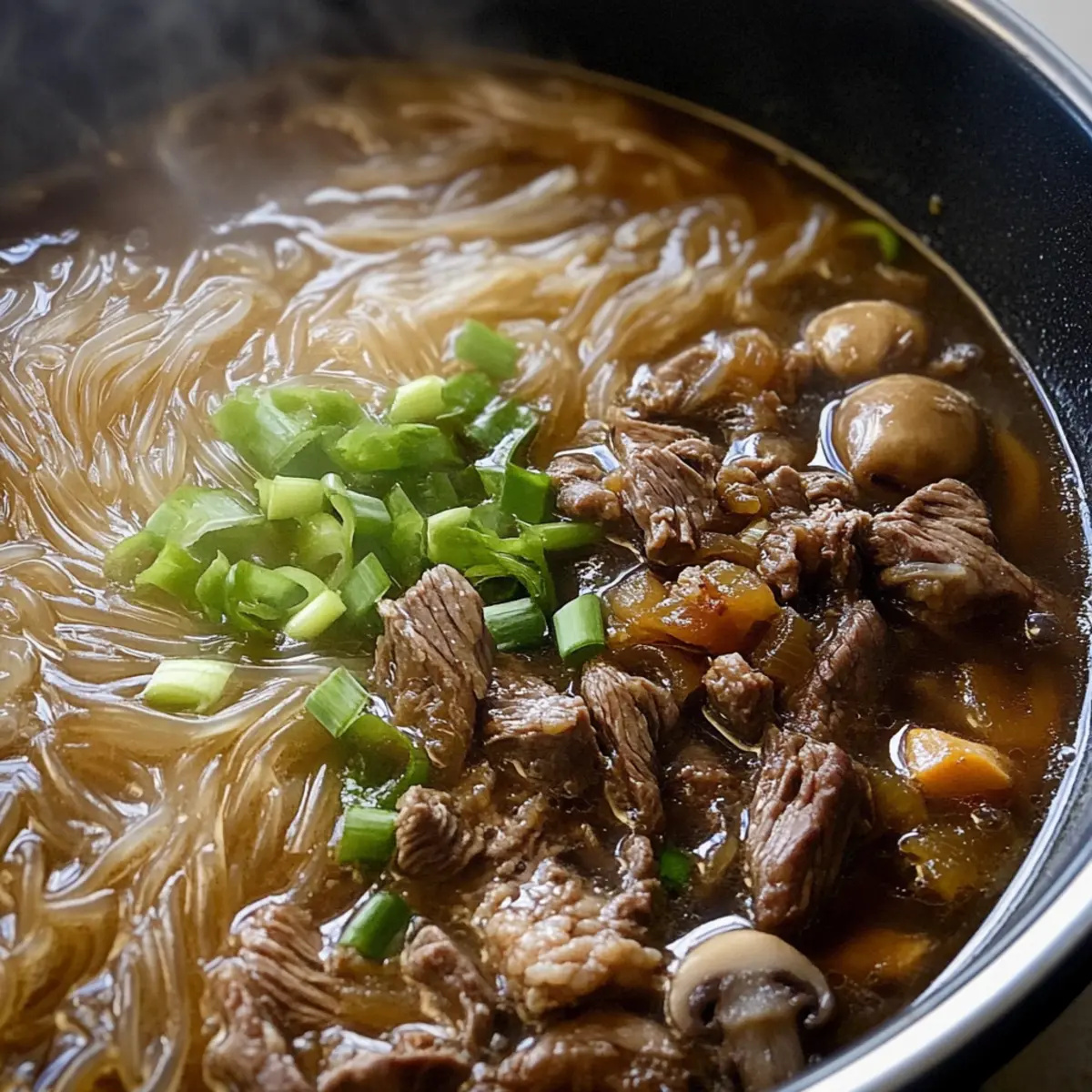
Korean Beef Bulgogi Stew Recipe FAQs
What type of bulgogi should I use for the stew?
Absolutely, using leftover Korean Beef Bulgogi is the best choice as it adds depth and richness to the stew. If you don’t have any on hand, marinate fresh beef overnight with soy sauce, sugar, garlic, and sesame oil to replicate that delicious flavor profile.
How do I store leftover Korean Beef Bulgogi Stew?
Leftover stew can be stored in an airtight container in the fridge for up to 3 days. Be sure to let it cool before sealing to maximize its freshness.
Can I freeze Korean Beef Bulgogi Stew?
Yes, you can freeze the stew! Pour it into freezer-safe containers and store it for up to 3 months. Just remember to leave some space at the top of the container as the stew will expand when frozen.
What should I do if the noodles get too soft?
If your noodles absorb too much broth and become mushy, don’t worry! When reheating, simply add a splash of water or beef stock to restore the dish’s consistency. Stir gently while warming to keep everything blended and delicious.
Can I modify this recipe for dietary restrictions?
Certainly! For gluten-free options, use tamari in place of soy sauce and ensure your glass noodles are certified gluten-free. To accommodate vegetarian diets, swap the beef for tofu and use vegetable broth instead of water for a similar comforting quality.
How can I enhance the flavor of the stew?
For a richer broth, consider using beef stock instead of water. Additionally, adding fresh vegetables like bok choy or carrots not only enhances the nutrition but also offers a lovely burst of color and flavor in your Korean Beef Bulgogi Stew.
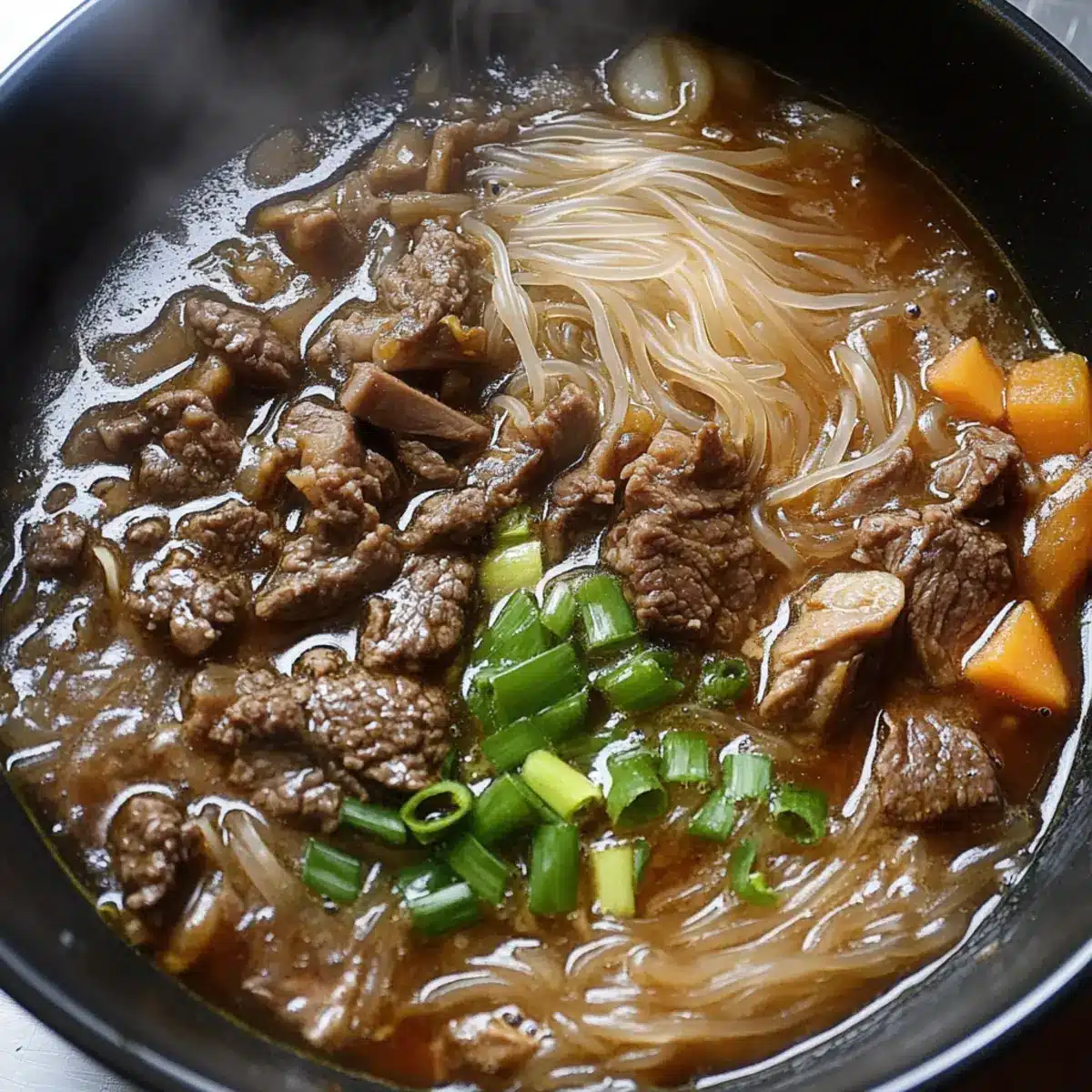
Comforting Korean Beef Bulgogi Stew in Just 15 Minutes
Ingredients
Equipment
Method
- Soak the glass noodles in warm water for about 15 minutes, then drain and set aside.
- Heat the leftover bulgogi in a medium pot over medium heat for 2-3 minutes until hot.
- Stir in the dark soy sauce and sesame oil, mixing for another minute.
- Pour in four cups of water and bring to a gentle boil, about 3-5 minutes.
- Add the soaked glass noodles and enoki mushrooms; cook for 2-3 minutes.
- Remove from heat, ladle into bowls, and garnish with fresh green onion.
Leave a Reply