
As the chill of evening sets in, I find myself in a cozy kitchen, the aroma of savory delights wafting through the air. There’s something magical about a steaming bowl of Korean Beef Bulgogi Stew; it’s like a warm hug on a plate, combining tender marinated beef and chewy sweet potato glass noodles in a rich, savory broth. This comforting dish is perfect for quickly transforming leftover bulgogi into a hearty family meal in just 15 minutes! Not only is it a crowd-pleaser, but it also allows you to turn tired ingredients into something truly special. So, are you ready to dive into a delightful bowl of this Korean comfort food? Let’s get cooking!
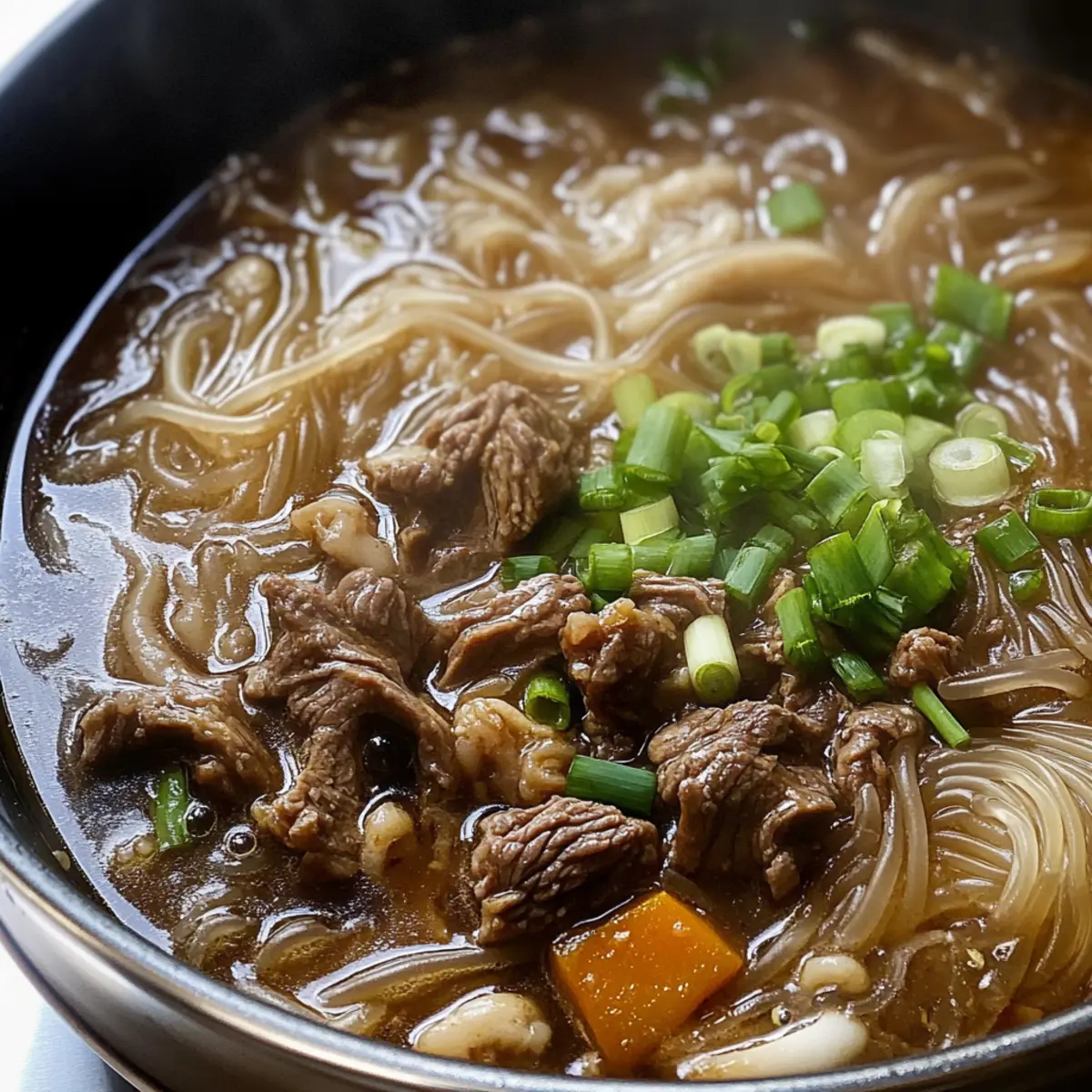
What makes this stew irresistible?
Simplicity: This Korean Beef Bulgogi Stew comes together in just 15 minutes, making it an ideal choice for busy nights.
Flavor Explosion: Every spoonful offers a deep, savory flavor with notes of umami, thanks to the beef bulgogi and soy sauce.
Comfort in a Bowl: The combination of chewy glass noodles and tender beef creates a cozy texture that warms your soul.
Versatility: You can easily customize it by adding seasonal vegetables or swapping noodles, keeping it fresh and exciting.
Leftover Love: This recipe shines in utilizing leftovers, transforming them into a hearty meal that doesn’t feel rushed or mundane.
Elevate your dining experience by pairing it with traditional Korean banchan, like kimchi or pickled vegetables, for an authentic touch!
Korean Beef Bulgogi Stew Ingredients
• Gather everything you need for a comforting bowl of Korean Beef Bulgogi Stew!
For the Stew
- Korean Beef Bulgogi – The star of the stew, providing sweet-savory flavor and richness; using leftovers enhances its depth.
- Sweet Potato Glass Noodles (Dangmyeon) – Adds a chewy texture that wonderfully absorbs the broth; feel free to substitute with rice noodles or udon if needed.
- Enoki Mushrooms – Introduces tender-crisp texture and earthy flavor; shiitake or button mushrooms can work well too.
- Green Onion – Offers a fresh, oniony burst to brighten the stew; chives or leeks are good alternatives.
- Water – Acts as the broth base; consider using beef stock for a richer taste.
For Extra Flavor
- Sesame Oil – Provides a nutty flavor and silky texture; vegetable oil is a lighter substitute if preferred.
- Soy Sauce – Essential for umami and saltiness, balancing the richness of the stew; tamari or coconut aminos can serve as gluten-free options.
Now that you have your ingredients ready, it’s time to make your delightful Korean Beef Bulgogi Stew!
Step‑by‑Step Instructions for Korean Beef Bulgogi Stew
Step 1: Soak the Noodles
Begin by soaking the sweet potato glass noodles in a bowl of warm water. Allow them to soak for about 10 minutes until they soften. This step is crucial as it ensures the noodles will cook evenly in the broth. While they soak, you can prepare your other ingredients for the stew.
Step 2: Heat the Beef
In a large pot, add the leftover Korean beef bulgogi and heat over medium heat. Stir occasionally, for about 3-5 minutes, until the bulgogi is warmed through and slightly caramelized on the edges, enhancing its flavor. This step infuses the base of the stew with the rich, sweet-savory notes from the beef.
Step 3: Add Seasonings
Once the beef is warmed, pour in the dark soy sauce and sesame oil. Stir everything together for another 1-2 minutes to ensure that the flavors meld. The richness of the oil combined with the umami of the soy sauce will set the foundation of your Korean Beef Bulgogi Stew.
Step 4: Create the Broth
Next, carefully add about 4 cups of water to the pot (or beef stock for extra flavor). Turn the heat up and bring the mixture to a gentle boil, which should take about 5 minutes. Watch for small bubbles forming; this indicates that it’s time to add in the noodles.
Step 5: Cook the Noodles and Mushrooms
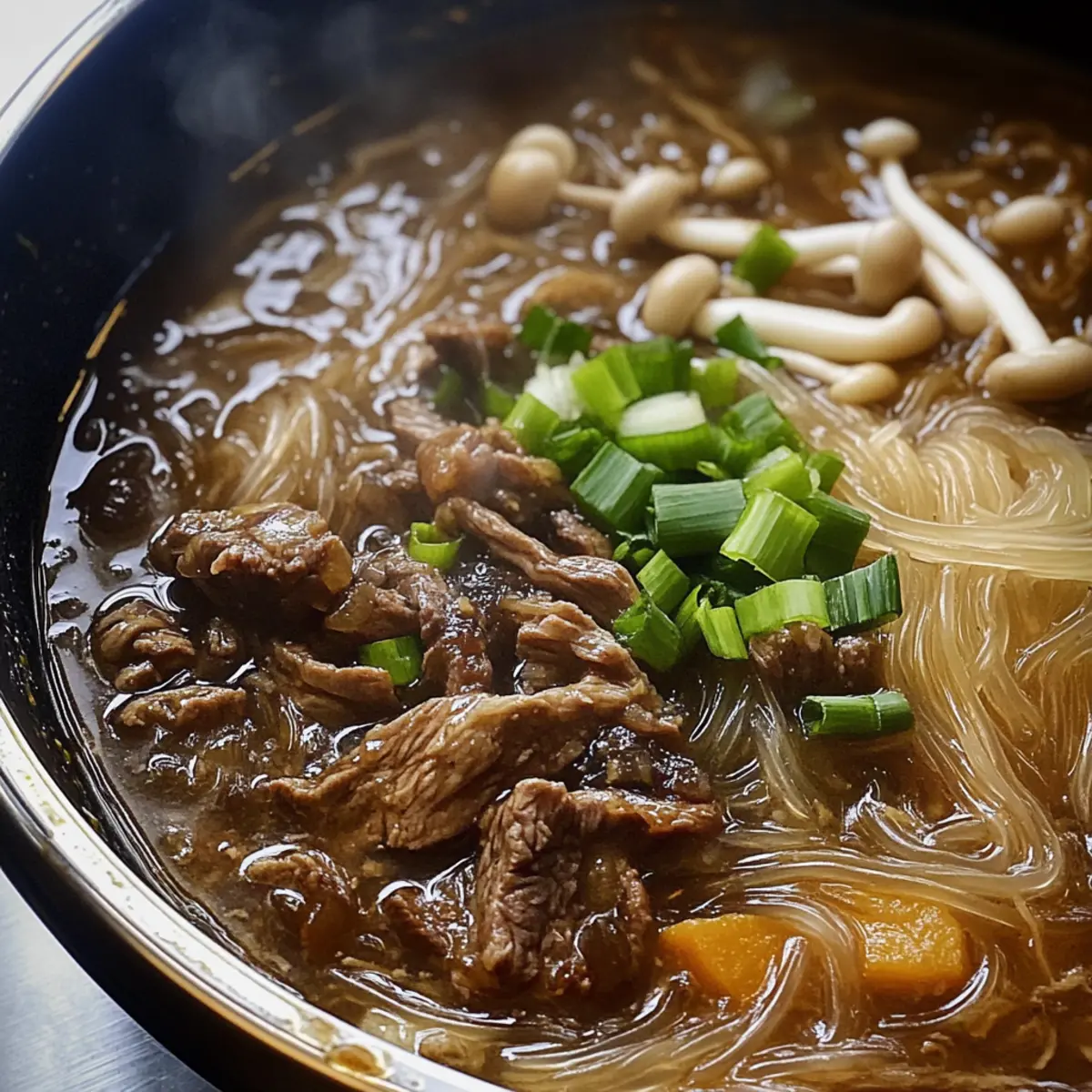
Once the broth is boiling, add the soaked glass noodles and a handful of enoki mushrooms. Allow the mixture to cook for 3-4 minutes, stirring occasionally until the noodles are tender and the mushrooms are slightly softened. This step is vital to ensure all ingredients meld beautifully in your delightful Korean Beef Bulgogi Stew.
Step 6: Garnish and Serve
Finally, remove the pot from the heat. Sprinkle chopped green onions on top for a fresh, vibrant touch. Serve the stew hot in bowls, allowing everyone to enjoy this heartwarming dish. The contrasting textures of tender beef, chewy noodles, and earthy mushrooms make every bite a comforting experience.
What to Serve with Quick & Hearty Korean Beef Bulgogi Stew
Serving up a steaming bowl of this delightful stew invites endless possibilities for delicious pairings.
- Steamed Rice: Fluffy white rice acts as a neutral base, soaking up the rich broth and enhancing the meal’s comfort.
- Kimchi: This tangy, fermented side dish adds a zesty crunch, complementing the savory flavors of the stew while boosting gut health.
- Pickled Vegetables: Lightly pickled cucumbers or radishes provide a refreshing contrast, cutting through the stew’s depth with their crisp texture.
- Banchan: Traditional Korean side dishes like seasoned spinach or bean sprouts add fresh elements and bright flavors to your table.
For a complete experience, consider a fruit-based dessert like sliced mandarin oranges or a sweet, refreshing sorbet for the perfect ending to your cozy meal!
- Cold Beer or Soju: A chilled beer or glass of soju pairs wonderfully, enhancing the meal with a contrasting chill against the flavorful warmth of the stew.
Korean Beef Bulgogi Stew Variations
Feel free to let your creativity shine as you customize this delightful stew to suit your taste and pantry!
-
Fresh Bulgogi: Use freshly marinated beef bulgogi for a vibrant flavor that doesn’t just highlight leftovers. It’s a great way to elevate your meal!
-
Alternative Noodles: Swap sweet potato glass noodles for ramen, udon, or even zucchini noodles to change up the texture. Each option brings its own delightful twist.
-
Veggie Boost: Add seasonal vegetables like bok choy or carrots for extra color and nutrients. This not only increases the health factor but makes every bowl visually appealing.
-
Spicy Kick: Throw in some sliced jalapeños or a splash of gochujang (Korean chili paste) if you crave heat. It adds an exciting flavor dimension that heat lovers will adore.
-
Herbaceous Flair: Enhance the stew with fresh herbs like cilantro or Thai basil for a fragrant finish. They bring brightness and freshness that complement the savory broth beautifully.
-
Umami Depth: Consider incorporating a splash of fish sauce for a deep umami flavor. A little goes a long way in enriching the overall taste of your stew.
-
Creamy Twist: Add a dollop of creamy coconut milk for a lush, velvety broth. This alternative creates a comforting embrace while lending a hint of sweetness.
-
Noodle-Free Option: For a lower-carb version, omit the noodles and increase the amount of vegetables. This ensures you won’t miss the carbs while indulging in a hearty bowl!
Don’t forget, every twist you make can turn this wholesome dish into a new family favorite. And if you want to explore even more flavors, check out the delicious Chilli Beef Flavor or dive into other dishes like Garlic Butter Beef to keep your meals exciting!
Make Ahead Options
These Korean Beef Bulgogi Stew meal prep options will save you time during your busy week! You can prepare the beef bulgogi up to 3 days in advance and store it in an airtight container in the refrigerator to keep it fresh and flavorful. Additionally, soak the sweet potato glass noodles ahead of time (up to 24 hours) in warm water and keep them refrigerated until you’re ready to cook. When it’s time to serve, simply heat the beef bulgogi, add the broth, and incorporate the noodles and mushrooms; in just minutes, you’ll have a comforting, restaurant-quality stew at your fingertips!
Expert Tips for Korean Beef Bulgogi Stew
-
Soak Noodles Properly: Ensure the sweet potato glass noodles are soaked enough to prevent breaking. This guarantees a delightful texture in your Korean Beef Bulgogi Stew.
-
Avoid Overcooking Mushrooms: Keep enoki mushrooms slightly crisp for added texture. Overcooking makes them too soft and less appealing in your hearty stew.
-
Season to Taste: Adjust soy sauce according to your preference; if you’re using a low-sodium version, you might need slightly more to enhance the flavor of the stew.
-
Add Variety: Don’t hesitate to customize the stew! Toss in seasonal veggies like bok choy or carrots for color and nutrition, making it truly your own.
-
Quick Reheating: When reheating leftovers, do so gently over low heat. This will help maintain the texture of the glass noodles in your delicious Korean Beef Bulgogi Stew.
Storage Tips for Korean Beef Bulgogi Stew
Fridge: Store leftovers in an airtight container in the refrigerator for up to 2 days to maintain freshness and flavor.
Freezer: If you want to keep the stew longer, freeze it in a freezer-safe container for up to 3 months. Be sure to leave some space for expansion.
Reheating: Gently reheat in a pot on low heat. Stir occasionally until heated through, ensuring that the noodles don’t overcook and become mushy.
Separate Storage: For best results, consider storing the noodles separately from the broth if you’re planning to freeze. This helps retain the ideal texture of the noodles when you’re ready to enjoy your Korean Beef Bulgogi Stew.
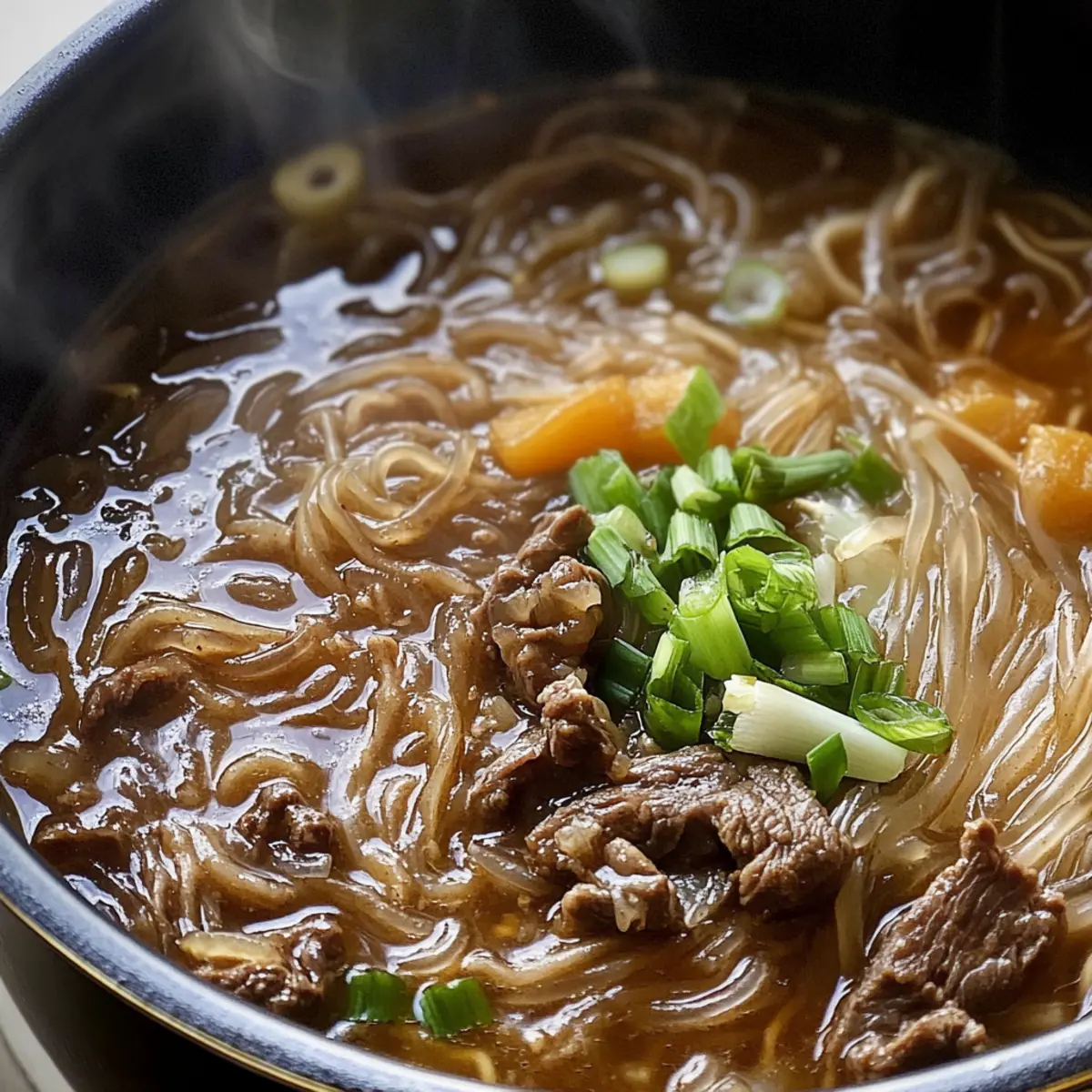
Korean Beef Bulgogi Stew Recipe FAQs
What should I look for when selecting beef bulgogi?
Absolutely! When choosing beef bulgogi, look for meat that is well-marbled and thinly sliced. The marbling adds tenderness and flavor, which results in a richer stew. You can also opt for pre-marinated bulgogi at the store for convenience.
How should I store leftover Korean Beef Bulgogi Stew?
For the best results, store any leftovers in an airtight container in the refrigerator for up to 2 days. When ready to enjoy, gently reheat on the stove over low heat to avoid overcooking the delicate glass noodles.
Can I freeze Korean Beef Bulgogi Stew?
Yes, you can! To freeze this stew, place it in a freezer-safe container and it will last up to 3 months. Make sure to leave at least an inch of space at the top of the container to allow for expansion as it freezes. For the best texture, consider freezing the noodles separately from the broth.
What if my glass noodles are mushy after cooking?
If you find your glass noodles are mushy, it may be because they were over-soaked before adding to the stew. Next time, try soaking them for just about 10 minutes and checking for doneness while cooking. You want them to be tender but still maintain a slight bite!
Are there any dietary considerations for this recipe?
Certainly! This Korean Beef Bulgogi Stew can be adjusted for various dietary needs. For gluten-free options, use tamari or coconut aminos in place of standard soy sauce. Additionally, if you’re cooking for someone with food allergies, always check that your beef bulgogi and other ingredients are free from allergens.
Could I use other types of noodles instead of glass noodles?
Very much so! If sweet potato glass noodles aren’t available, feel free to substitute with rice noodles, udon, or even zucchini noodles for a lower-carb option. Just adjust the cooking time as needed to achieve your desired texture.
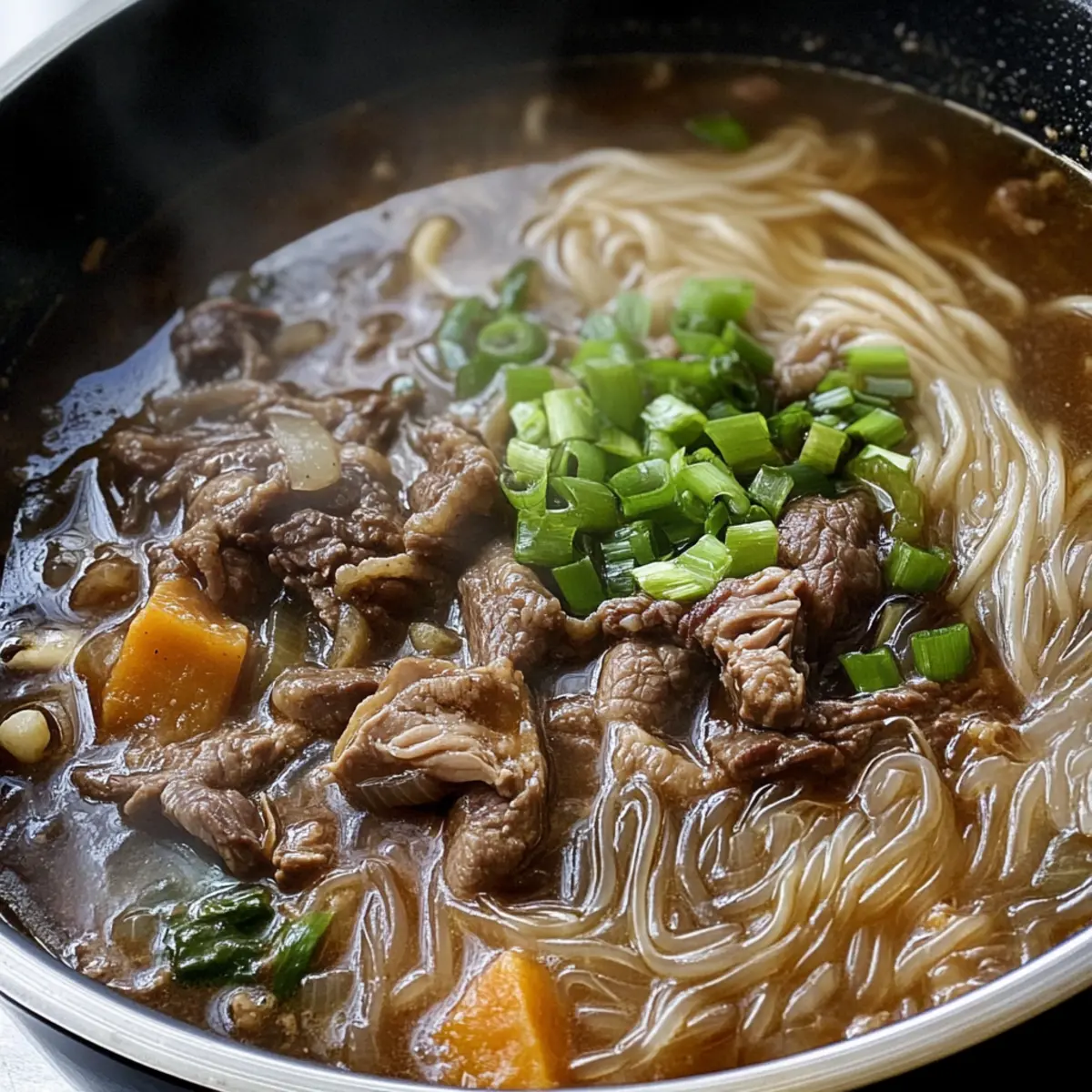
Comforting Korean Beef Bulgogi Stew Ready in 15 Minutes
Ingredients
Equipment
Method
- Soak the sweet potato glass noodles in warm water for about 10 minutes until softened.
- In a large pot, heat the leftover Korean beef bulgogi over medium heat for 3-5 minutes until warmed and slightly caramelized.
- Add soy sauce and sesame oil, stirring for 1-2 minutes to meld the flavors.
- Add 4 cups of water (or beef stock) and bring to a gentle boil for about 5 minutes.
- Add soaked glass noodles and enoki mushrooms, cooking for 3-4 minutes until noodles are tender.
- Remove from heat and garnish with chopped green onions before serving hot.
Leave a Reply