
It was a chilly evening when I found myself staring at the fridge, contemplating dinner. That’s when I spotted the leftover bulgogi, just waiting for a delicious transformation. Enter the Korean Beef Bulgogi Stew—a cozy dish that turns those savory morsels into a warming bowl of goodness in just 15 minutes. With chewy sweet potato glass noodles soaking up the rich broth and tender beef melting in every bite, this stew is not only a comfort food favorite but also a fantastic way to elevate your meal prep game. Plus, it’s gluten-friendly, making it a quick, worry-free option for everyone at the table. Curious how this delightful dish can save your weeknights? Let’s dive into the recipe!
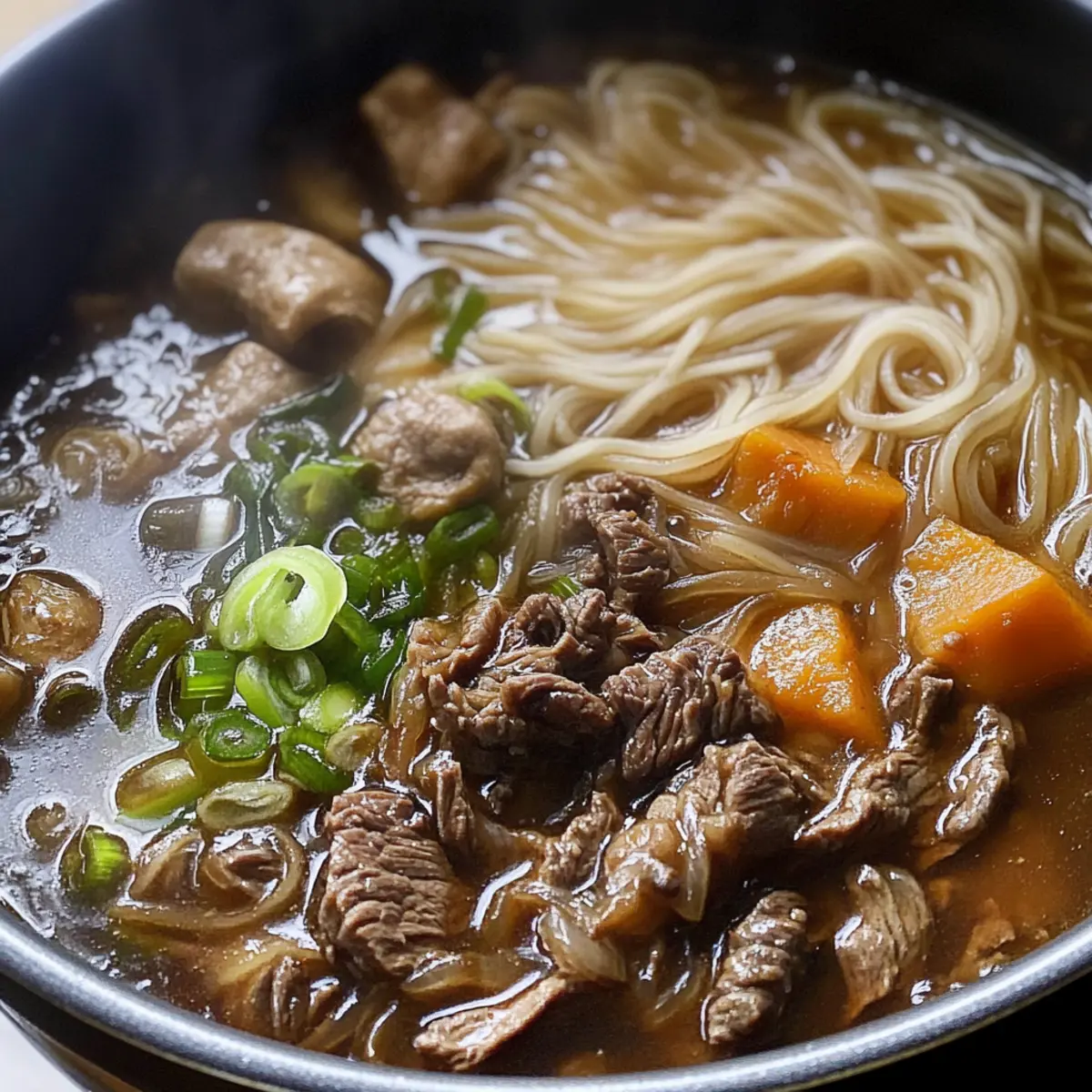
Why Is This Stew So Irresistible?
Simplicity: This recipe is super easy to whip up, taking just 15 minutes—great for busy weeknights and unexpected guests alike.
Comforting Flavors: With sweet-savory bulgogi and chewy glass noodles, every spoonful delivers a warm hug of flavors that will make you feel right at home.
Versatile Ingredients: Swap in your favorite veggies like bok choy or napa cabbage for added nutrients and colors, ensuring every bowl is packed with goodness.
Crowd-Pleaser: Bring this stew to the table, and watch it disappear—it’s delightful enough for gatherings or solo indulgence; everyone will love it.
Gluten-Friendly: Perfect for those following a gluten-friendly diet, this dish allows you to savor the richness of Korean flavors without worry. Plus, pair it with traditional sides like kimchi for a true cultural experience!
Korean Beef Bulgogi Stew Ingredients
For the Stew
• Korean Beef Bulgogi – The star protein; it brings sweet-savory notes and can be swapped with freshly marinated bulgogi if no leftovers are at hand.
• Sweet Potato Glass Noodles (Dangmyeon) – These chewy noodles soak up the broth beautifully; if you prefer, rice noodles or udon can provide a different texture.
• Enoki Mushrooms – Adds an earthy flavor with a tender-crisp texture; their delicate nature enhances the broth’s richness.
• Green Onions – Offering a fresh, mildly oniony flavor; they not only taste great but also add color and vibrancy to the dish.
• Water – The foundational element for your broth; enhance its flavor by using beef stock instead for a richer taste.
• Sesame Oil – This nutty oil deepens the flavor of the stew while providing a luscious texture to the broth.
• Dark Soy Sauce – Infuses umami and a touch of sweetness to balance the rich notes from the stew, making it utterly satisfying.
Now you’re all set to create a warming bowl of Korean Beef Bulgogi Stew! Each ingredient plays a part in crafting a dish that is comforting and full of flavor. Happy cooking!
Step‑by‑Step Instructions for Korean Beef Bulgogi Stew
Step 1: Prepare Noodles
Begin by soaking the sweet potato glass noodles in warm water for about 10 minutes, or until they become pliable. This step is crucial for ensuring that the noodles absorb the delicious flavors of your Korean Beef Bulgogi Stew. Once softened, drain them and set aside while you prepare the rest of the ingredients.
Step 2: Heat Base
In a medium-sized pot, over medium heat, add the leftover bulgogi and stir gently until it’s warmed through, about 3 to 5 minutes. Look for a slight sizzle as the beef begins to release its savory aroma. Stir frequently to ensure even heating, allowing the bulgogi’s sweet-savory flavors to permeate the pot.
Step 3: Flavor Base
Once the bulgogi is heated, pour in the dark soy sauce and drizzle the sesame oil over the beef. Stir everything together for another 2 minutes, ensuring the bulgogi is well-coated. The mixture should become glossy and fragrant, enhancing the foundation of your Korean Beef Bulgogi Stew with deeper umami flavors.
Step 4: Make Broth
Carefully pour in about 4 cups of water or beef broth, and bring the mixture to a boil over high heat. Watch for bubbling, which should occur in about 4 to 5 minutes. The broth will begin to take on the rich color and aroma from the bulgogi, creating a delightful base for your stew.
Step 5: Add Noodles & Veggies
Once boiling, stir in the soaked glass noodles and the enoki mushrooms. Allow them to cook together for about 2 to 3 minutes until the noodles are tender and heated through, and the mushrooms are just beginning to wilt. Keep an eye on the pot to prevent overcooking; the noodles should remain chewy within the hearty broth.
Step 6: Serve
Ladle the hot Korean Beef Bulgogi Stew into bowls, garnishing each with a sprinkle of chopped green onions for color and freshness. Serve immediately, ideally alongside steamed rice or a side of kimchi to heighten the meal’s warmth and flavor. Enjoy this comforting dish while it’s steaming hot, perfect for cozy evenings!
Make Ahead Options
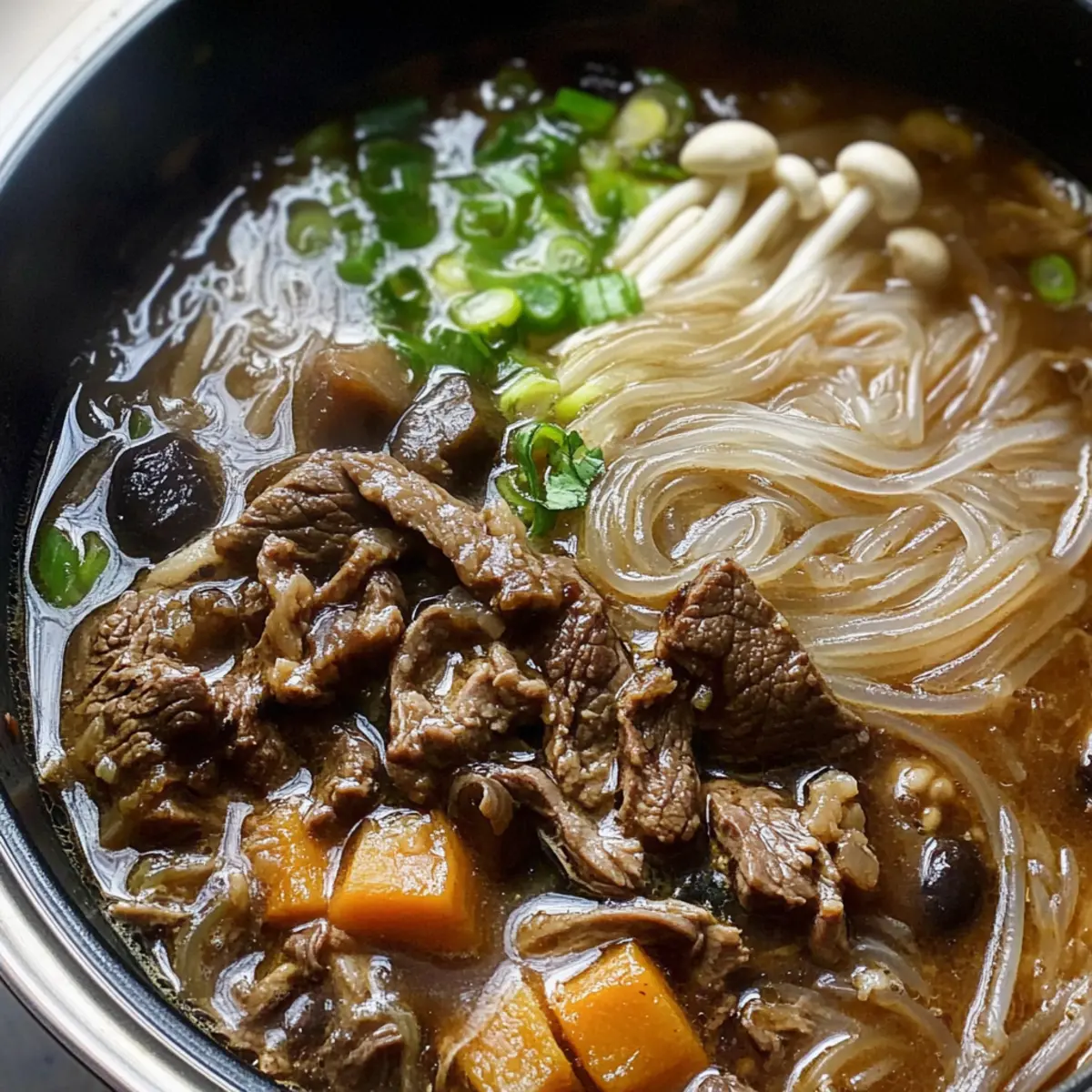
These Korean Beef Bulgogi Stew can be prepared in advance, saving you time on busy weeknights! You can marinate the bulgogi up to 24 hours in advance for optimal flavor, or keep the cooked bulgogi refrigerated for up to 3 days. Additionally, soak the sweet potato glass noodles the night before and store them in an airtight container to maintain their texture. When you’re ready to enjoy the stew, simply heat the bulgogi, add the broth, and incorporate the pre-soaked noodles and enoki mushrooms for a comforting meal. This way, you’ll have a steaming bowl of Korean Beef Bulgogi Stew on the table in no time, just as delicious as if you made it fresh!
Korean Beef Bulgogi Stew Variations
Feel free to customize your stew to suit your taste and dietary preferences for a truly personal touch!
-
Gluten-Free: Simply use tamari instead of dark soy sauce to keep the flavor while making it gluten-friendly. Your tastebuds won’t know the difference!
-
Veggie-Loaded: Add seasonal vegetables like bok choy or napa cabbage to increase nutrients and bring vibrant colors to your dish. It’s a delightful way to make the meal even heartier.
-
Noodle Alternatives: Swap sweet potato glass noodles for rice noodles or udon if that’s what you have on hand. Each brings its own unique texture, making every bowl a new experience.
-
Protein Packed: Replace bulgogi with shredded chicken or tofu for a different twist on this comforting stew. Each alternative provides its own flavor, while still delivering that warm, cozy feeling.
-
Spicy Kick: Add sliced fresh chili peppers or a dash of gochujang (Korean red chili paste) to the stew for heat. Just a little will elevate the aroma and zing—perfect for those who love spice!
-
Creamy Finish: Stir in a splash of coconut milk towards the end for a luscious, creamy variant. This adds a sweet richness that perfectly complements the savory flavors.
-
Savor the Broth: For a richer broth, use beef stock instead of water. The deep flavor enhances each bite, making your stew even more comforting. If you’re interested in similar flavors, try my Crock Pot Beef for a different take on a classic.
-
Herb Infusion: Incorporate fresh herbs like cilantro or basil into the serving for a fragrant garnish. These add brightness to every bowl, creating a lovely contrast with the hearty ingredients. Enjoy experimenting with various combinations!
What to Serve with Korean Beef Bulgogi Stew
Transform your Korean Beef Bulgogi Stew into an unforgettable feast with these perfect pairings, enhancing each comforting bite.
-
Steamed Rice: This classic side absorbs the rich broth beautifully and balances the savory flavors of the stew, making every spoonful delightful.
-
Kimchi: A spicy, fermented side that offers a crunchy contrast, kimchi introduces a tangy brightness perfect for cutting through the stew’s richness.
-
Garlic Bread: The buttery, garlicky notes of warm garlic bread provide a satisfying textural contrast and a wonderful way to soak up every drop of that savory broth.
-
Seasonal Green Salad: A fresh salad with light dressings introduces a crisp texture and brightens the meal, enhancing the flavors and adding a refreshing touch.
-
Sweet Potato Fries: Opt for sweet potato fries drizzled with sesame oil for a warm flavor enhance that complements the sweetness of the bulgogi. They add crunch and a heartwarming sweetness.
-
Mango Lassi: Cool and creamy, this yogurt-based drink not only balances the heat from any spices but also adds a delightful fruity note to your meal experience.
-
Chilled Cucumber Salad: This light, crunchy dish brings fresh zest and coolness to your plate, offering a refreshing palate cleanser between bites of hearty stew.
-
Japanese Sake: A warm glass of sake elevates the meal experience with its subtlety and smoothness, perfectly pairing with the umami notes of the bulgogi.
-
Honeyed Pears for Dessert: End on a sweet note with warm honeyed pears—they provide a light finish that echoes the stew’s comforting warmth.
Expert Tips for Korean Beef Bulgogi Stew
-
Fresh vs. Leftover: Use freshly marinated bulgogi for a richer flavor; just ensure it’s fully cooked before adding to the stew.
-
Soaking Noodles: Soak sweet potato glass noodles for at least 10 minutes to ensure they reach the ideal chewy texture when cooked in the broth.
-
Adjusting Broth: If you prefer a richer flavor, substitute water with beef stock. This adds depth and enhances the overall taste of the Korean Beef Bulgogi Stew.
-
Adding Veggies: Feel free to toss in seasonal vegetables like bok choy or carrot slices; they’ll add nutrition and a pop of color to the dish.
-
Toppings Galore: Get creative with toppings! Chopped cilantro or crushed red pepper flakes can elevate your stew’s flavor profile delightfully.
How to Store and Freeze Korean Beef Bulgogi Stew
Fridge: Store leftovers in an airtight container for up to 3 days. This Korean Beef Bulgogi Stew tastes even better the next day as the flavors meld together!
Freezer: For longer storage, freeze the stew in a freezer-safe container for up to 2 months. Allow it to cool completely before sealing to avoid freezer burn.
Reheating: Thaw in the fridge overnight. Reheat gently on the stovetop over medium heat, adding a splash of water or broth if needed to loosen the consistency. Enjoy your hearty stew warm!
Airtight Storage: Always use airtight containers to keep your stew fresh and flavorful. This helps maintain its delicious flavors for every delightful bowl you serve!
Korean Beef Bulgogi Stew Recipe FAQs
How do I select the best ingredients for my stew?
Absolutely! When selecting your ingredients, look for fresh, high-quality bulgogi; it should be tender and marbled for better flavor. For sweet potato glass noodles, ensure they are clear and free of dark spots. Fresh enoki mushrooms should be firm with tightly closed caps. For green onions, choose ones with bright green tops and white bottoms; avoid any with wilting or slimy parts.
What is the best way to store leftovers of the stew?
You can store leftovers of the Korean Beef Bulgogi Stew in an airtight container in the fridge for up to 3 days. It’s ideal to let it cool completely before transferring it to maintain its flavor. When ready to enjoy, simply reheat on the stovetop over medium heat, stirring occasionally to warm it through evenly.
Can I freeze Korean Beef Bulgogi Stew?
Yes, you can freeze this delightful stew! Allow it to cool completely and then transfer it to a freezer-safe container. It can be kept in the freezer for up to 2 months. When you’re ready to enjoy it again, thaw it overnight in the fridge and reheat gently on the stovetop, adding a splash of water or broth if needed.
What if my glass noodles are too firm after cooking?
Very! If your noodles end up too firm, they might not have soaked long enough before cooking. Next time, soak them in warm water for at least 10 minutes until they are pliable. If they still seem firm after stir-frying, you can simmer them a bit longer in the broth until they achieve the desired chewy texture.
Are there any dietary considerations I should keep in mind?
Absolutely! This recipe is gluten-friendly, especially if you use gluten-free soy sauce. Always check the labels of your ingredients to avoid any hidden gluten. Additionally, if you are serving this dish to children or pets, be cautious of the seasoning levels, especially the soy sauce, as it can be high in sodium.
Can I customize the stew with different vegetables?
The more, the merrier! Feel free to add seasonal vegetables like bok choy, carrots, or napa cabbage. Simply chop them into bite-sized pieces and add them to the pot along with the glass noodles and mushrooms during the cooking step. This not only enhances the flavor and texture of the stew but also packs it full of nutrition!
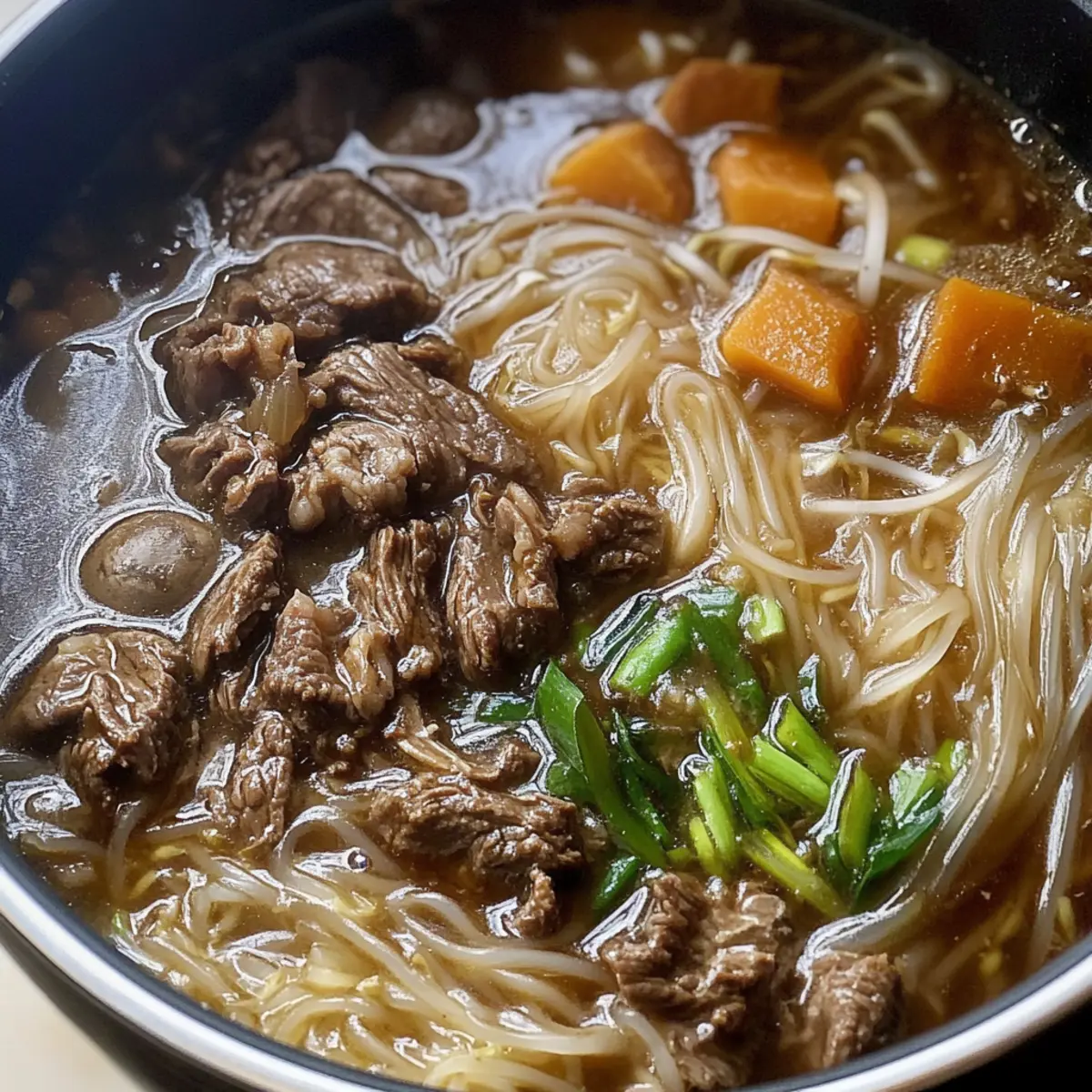
Korean Beef Bulgogi Stew: Comfort in Every Hearty Spoonful
Ingredients
Equipment
Method
- Soak the sweet potato glass noodles in warm water for about 10 minutes until pliable, then drain and set aside.
- In a medium-sized pot over medium heat, add the leftover bulgogi and stir gently until warmed through, about 3 to 5 minutes.
- Pour in dark soy sauce and drizzle sesame oil over the beef, stirring for another 2 minutes until glossy and fragrant.
- Pour in 4 cups of water or beef broth, bringing to a boil over high heat for about 4 to 5 minutes.
- Stir in the soaked glass noodles and enoki mushrooms, cooking for 2 to 3 minutes until noodles are tender.
- Ladle the stew into bowls, garnishing with chopped green onions, and serve immediately.
Leave a Reply