
There’s something incredibly satisfying about whipping up a classic Italian dish in your own kitchen! Enter the spicy Arrabbiata Sauce, a little gem that embodies both warmth and zest. With just 25 minutes of prep time, this tantalizing sauce transforms any pasta into a vibrant feast, making it a perfect addition to your weeknight dinner repertoire. The beauty of this recipe lies not only in its speed but also in its versatility; you can easily adapt it for various dietary preferences or add a personal twist with minimal effort. Plus, it’s a vegetarian delight that packs a punch without any fuss. So, are you ready to ignite your taste buds and create a fiery, homemade masterpiece? Let’s dive into this flavor adventure!
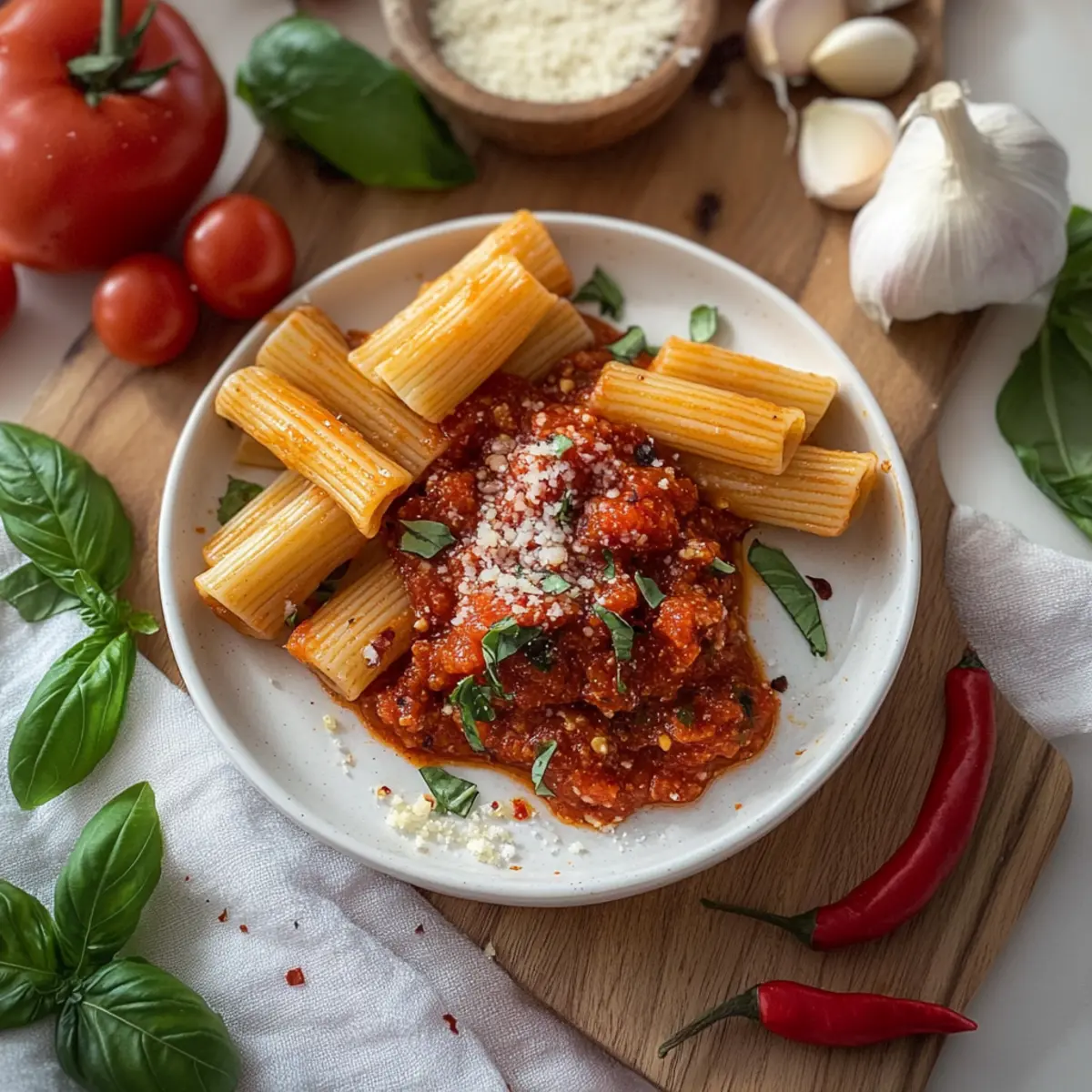
Why Is Arrabbiata Sauce So Popular?
Bold Flavors: This classic Italian sauce doesn’t hold back—its spicy kick and robust taste make every dish memorable!
Quick Preparation: In just 25 minutes, you can create an authentic sauce that tastes like it came straight from an Italian kitchen.
Versatile Use: Serve it over pasta, as a dip, or even in sandwiches; this sauce easily adapts to your meal.
Dietary Friendly: Embrace a vegetarian option without sacrificing flavor—perfect for family and friends with different preferences!
Crowd-Pleaser: Whether it’s a weeknight dinner or a casual gathering, this sauce impresses and satisfies, leaving everyone wanting more.
Ready to explore more home-cooked Italian delights? Check out our pasta recipes for creative inspiration to complement this sensational sauce!
Arrabbiata Sauce Ingredients
• Dive into the heart of flavor with these essential elements for your bold Arrabbiata Sauce!
For the Sauce
- Canned Crushed Tomatoes – A flavorful base; opt for whole peeled or San Marzano tomatoes for the best taste.
- Garlic (4 cloves, minced) – Offers aromatic richness; fresh garlic is vital for achieving depth.
- Extra Virgin Olive Oil (0.25 cup) – For sautéing; enhances the overall flavor profile, but you can reduce for a lighter option.
- Red Pepper Flakes (1 tsp) – Infuses the sauce with spicy heat; feel free to adjust according to your preference.
- Dried Oregano (0.5 tsp) – Adds earthy herbal notes; fresh oregano can brighten the flavor more.
- Salt (0.25 tsp) – Elevates all other flavors for a well-rounded taste.
- Black Pepper (0.25 tsp) – Contributes warmth and subtle spiciness to the mix.
Optional Garnishes
- Fresh Basil – A fragrant finishing touch that pairs perfectly with the heat of the sauce.
- Grated Parmesan Cheese – Adds a creamy richness; best sprinkled generously before serving.
Gather these ingredients, and you’re on your way to whipping up a delightful Arrabbiata Sauce that’s sure to impress!
Step‑by‑Step Instructions for Arrabbiata Sauce
Step 1: Sauté the Aromatics
Begin by heating ¼ cup of extra virgin olive oil in a large skillet over medium heat until shimmering, about 2 minutes. Carefully add 4 minced garlic cloves and 1 teaspoon of red pepper flakes. Sauté for 1 minute, stirring constantly, until the garlic is fragrant and lightly golden—be cautious not to burn it, as that can make the sauce bitter.
Step 2: Add the Tomatoes
Once the garlic is ready, pour in a 28-ounce can of crushed tomatoes along with ½ teaspoon of dried oregano, ¼ teaspoon of salt, and ¼ teaspoon of black pepper. Stir the mixture to combine all ingredients and bring it to a gentle simmer. You’ll see the sauce start bubbling, indicating it’s time to allow the flavors to meld together.
Step 3: Simmer to Perfection
Reduce the heat to low, letting the sauce simmer uncovered for 15 to 20 minutes. Stir occasionally, observing as it thickens and deepens in color. Keep an eye on it; it’s done when you can see the oil slightly separating from the tomatoes, creating a silky texture perfect for your pasta.
Step 4: Adjust Seasonings
After simmering, taste the Arrabbiata sauce and adjust the seasonings. If it feels too acidic, consider adding a pinch of sugar to balance the flavor. Stir well, and if desired, you can also toss in some chopped fresh basil just before serving to enhance its aroma and freshness.
Step 5: Serve and Garnish
Once the sauce meets your taste satisfaction, it’s ready for serving! Toss it over your favorite pasta like spaghetti or penne, allowing it to coat the noodles beautifully. For an extra touch of flavor, sprinkle grated Parmesan cheese or additional fresh basil on top before enjoying your homemade Arrabbiata sauce.
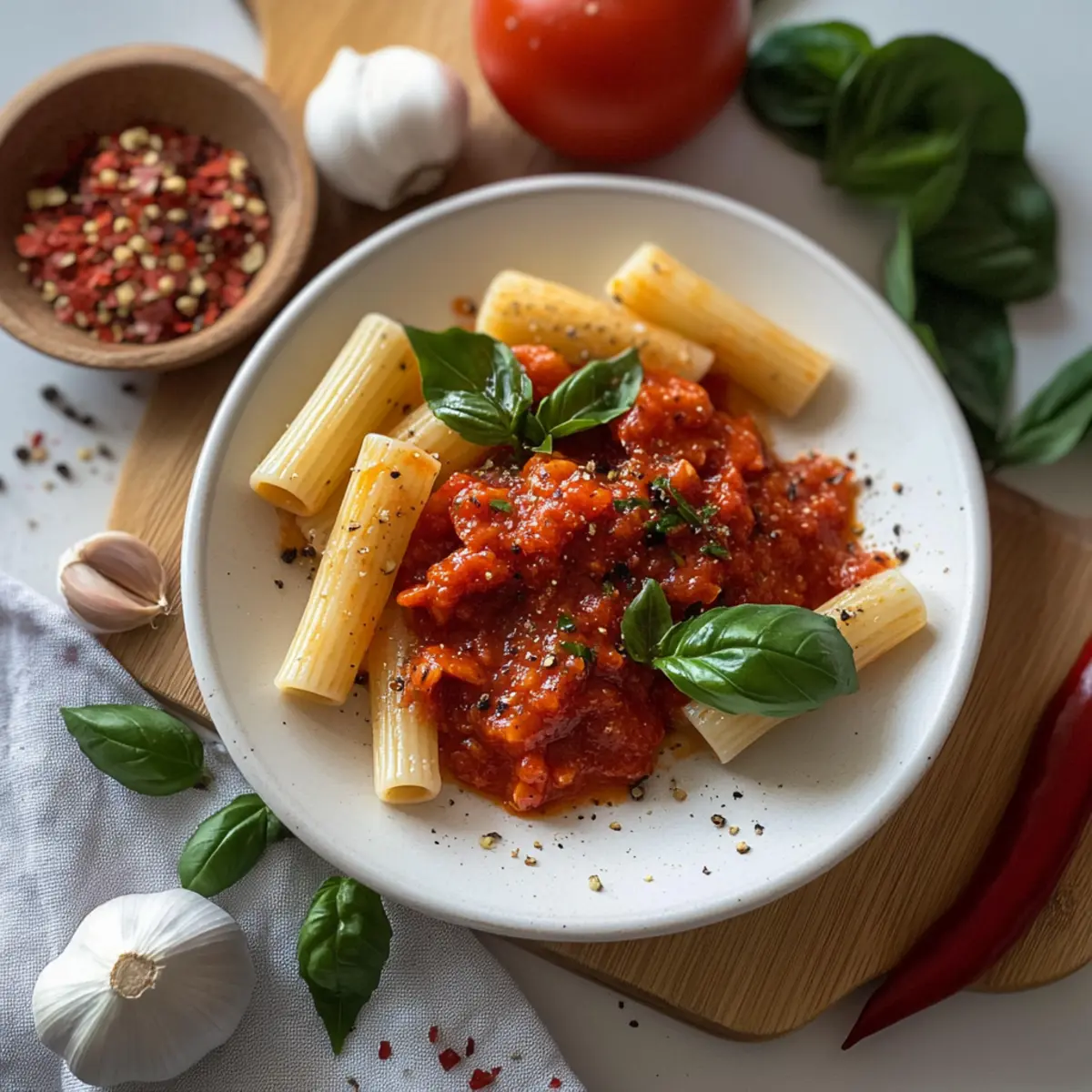
Expert Tips for Making Arrabbiata Sauce
-
Watch the Garlic: Keep a close eye on your minced garlic; it can burn quickly, resulting in a bitter taste that spoils your delightful Arrabbiata sauce.
-
Customize the Heat: Start with less red pepper flakes if you’re unsure about spice levels. You can always add more for that fiery kick later!
-
Quality Matters: Always choose high-quality canned tomatoes, like San Marzano, for an authentic flavor in your classic Italian sauce.
-
Simmer for Depth: Don’t rush the simmering process; letting your sauce cook for 15-20 minutes allows the flavors to meld beautifully.
-
Storing Leftovers: If you have any sauce left, store it in an airtight container in the fridge for up to five days, or freeze it for future meals.
-
Experiment with Variations: Feel free to add sautéed vegetables or use the sauce as a dip to elevate your homemade Arrabbiata sauce to new heights.
How to Store and Freeze Arrabbiata Sauce
Fridge: Store your leftover Arrabbiata sauce in an airtight container for up to 5 days, making it easy to enjoy later in the week.
Freezer: For longer storage, freeze the sauce in labeled portion-sized bags or containers. It will keep well for up to 3 months, ready for your next pasta night.
Reheating: To reheat, thaw in the fridge overnight and warm gently on the stove over low heat, stirring occasionally. Add a splash of water or more olive oil if the sauce thickens too much during freezing.
Portioning: Consider freezing in ice cube trays for convenient individual servings, perfect for adding a quick flavor boost to other dishes!
Make Ahead Options
These Arrabbiata Sauce preparations are a dream come true for busy home cooks! You can prepare the sauce up to 3 days in advance by following the normal cooking instructions and letting it cool completely before transferring it to an airtight container. Store it in the refrigerator, ensuring it remains delicious and flavorful. For longer storage, freeze the sauce in portion-sized bags for up to 3 months. When you’re ready to serve, simply reheat on the stovetop over low heat, stirring gently until warmed through. This make-ahead option saves you time, allowing you to enjoy a homemade Arrabbiata Sauce with minimal effort on busy weeknights while still delivering that authentic Italian taste!
What to Serve with Classic Spicy Arrabbiata Sauce
There’s nothing quite like a vibrant meal filled with warmth and rich flavors, ready to transport you to an Italian trattoria.
-
Spaghetti Aglio e Olio: This simple garlic and olive oil pasta complements the heat of the sauce, creating a delightful balance of flavors.
-
Garlic Bread: Crispy on the outside and soft inside, garlic bread is the perfect vessel for soaking up every last drop of that spicy Arrabbiata sauce!
-
Roasted Vegetables: A medley of seasonal veggies roasted to perfection adds a wonderful crunch and earthy taste to your meal, enhancing the sauce’s vibrant flavors.
-
Caprese Salad: Fresh mozzarella, ripe tomatoes, and fragrant basil create a refreshing contrast, balancing the spice while echoing the sauce’s Italian roots.
-
Arugula Salad: This peppery green, tossed with lemon vinaigrette, adds a peppery freshness that perfectly offsets the heat of the sauce.
-
Chianti Wine: A robust red wine elevates the dining experience, enhancing the spicy notes of the Arrabbiata while adding a layer of sophistication to your meal.
Embrace these pairings for a delightful dinner that not only pleases the palate but also creates beautiful memories around the table!
Arrabbiata Sauce Variations & Substitutions
Feel free to get creative with your Arrabbiata Sauce and tailor it to your taste buds or dietary needs!
-
Chunky Texture: Swap crushed tomatoes for diced tomatoes for a heartier sauce.
-
Veggie Lovers: Add sautéed zucchini or bell peppers for an extra dose of flavor and nutrition. This twist makes the dish even more colorful and satisfying!
-
Low-Carb Option: For a gluten-free choice, serve over spiralized zucchini or substitute with gluten-free pasta, allowing everyone to enjoy this classic.
-
Herb Boost: Experiment with fresh herbs like basil or parsley added at the end. Fresh herbs elevate the taste and bring brightness to the dish.
-
Extra Spice: If you crave more heat, try adding fresh chopped chili peppers alongside the garlic. It’ll kick up the fire factor beautifully!
-
Creamy Twist: For a rich variation, stir in a splash of cream or coconut milk for a creamy arrabbiata experience – a delightful surprise that perfectly balances the heat!
-
Umami Punch: Enhance flavor depth by adding sautéed mushrooms or even olives, which bring a delightful umami taste to the sauce.
-
Sweet Balance: A pinch of sugar can be added to cut through the acidity of the tomatoes, ensuring a perfectly balanced sauce that everyone will adore.
Explore these variations to make your Arrabbiata Sauce even more delightful! And while you’re at it, consider pairing this sauce with some of our delicious pasta recipes for a complete meal experience!
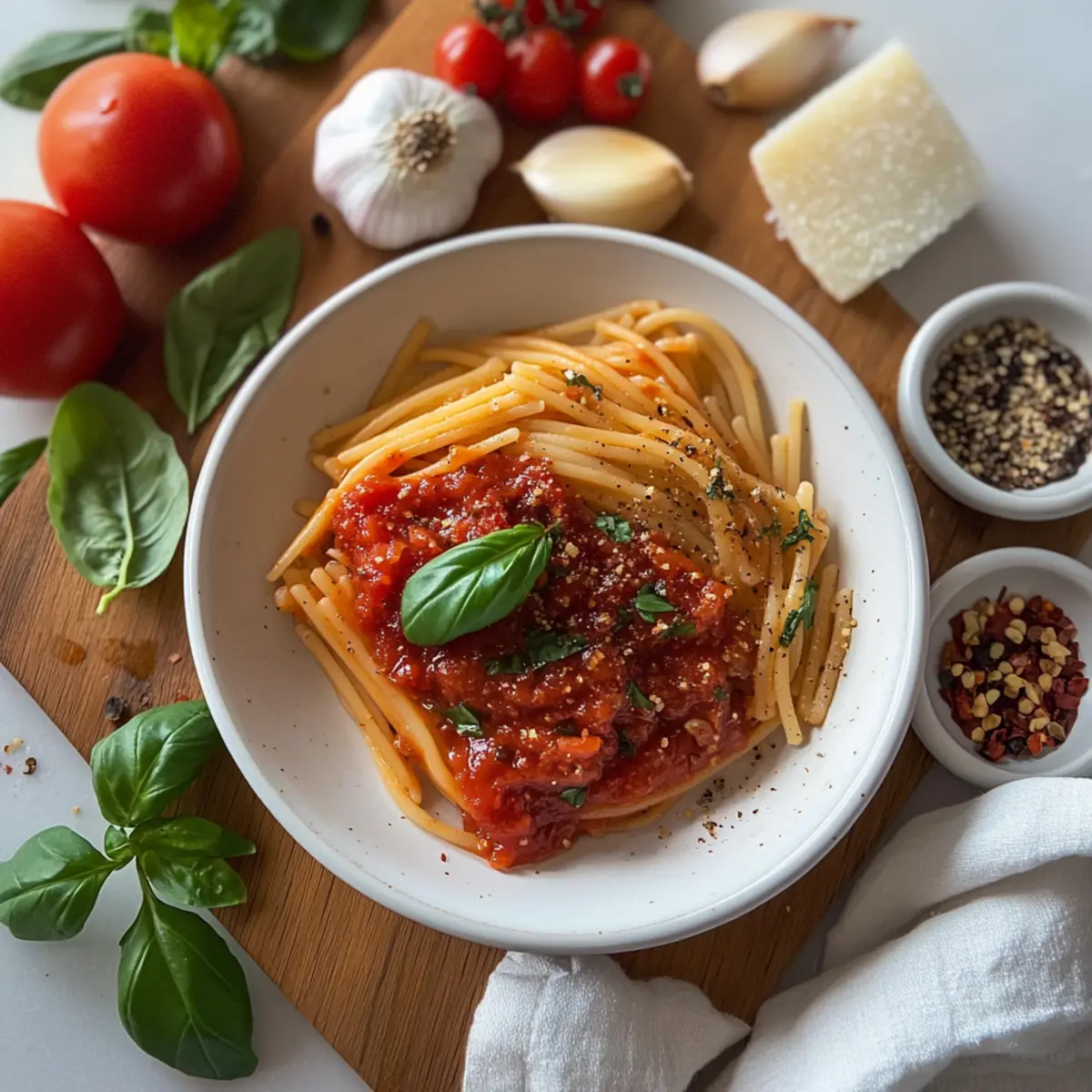
Arrabbiata Sauce Recipe FAQs
What type of canned tomatoes should I use for the best Arrabbiata sauce?
Absolutely! For a truly authentic flavor, opt for whole peeled or San Marzano canned tomatoes. They offer a rich, sweet taste that’s perfect for this spicy sauce. If you can’t find these, any high-quality crushed tomatoes will work, but checking for added sugars or preservatives is a good idea for the best results.
How should I store leftover Arrabbiata sauce?
Very easy! Simply place your leftover sauce in an airtight container and store it in the refrigerator for up to 5 days. Allow the sauce to cool before sealing the container to maintain freshness.
Can I freeze Arrabbiata sauce, and if so, how?
Absolutely! To freeze your Arrabbiata sauce, first allow it to cool. Then, pour it into labeled portion-sized freezer bags or containers. Lay the bags flat in the freezer for easy storage. The sauce will keep well for up to 3 months. When you’re ready to use it, simply thaw in the fridge overnight and reheat on the stovetop, adding a splash of water or olive oil if needed.
What should I do if my Arrabbiata sauce is too spicy?
Very common! If you find your sauce a bit too fiery, there are a few ways to balance the heat. You can add a pinch of sugar to counteract the spice, or you could incorporate more crushed tomatoes to dilute the heat. Another option is to add cream or cheese, which can help mellow out spiciness while adding richness.
Are there any dietary considerations for this recipe?
Yes, indeed! This Arrabbiata sauce is vegetarian and can easily be made vegan by ensuring no cheese is added as a garnish. For those with gluten sensitivities, serve this sauce over spiralized vegetables or gluten-free pasta. Always double-check for any potential allergens in the canned tomatoes you use, as some brands may add preservatives.
What does the texture of the finished sauce look like, and how can I tell when it’s done?
The final Arrabbiata sauce should be thick and vibrant in color. You’ll know it’s done when you see a slight separation of oil from the tomatoes after simmering for 15-20 minutes. The sauce should cling beautifully to pasta, giving a luxurious feel with every bite!
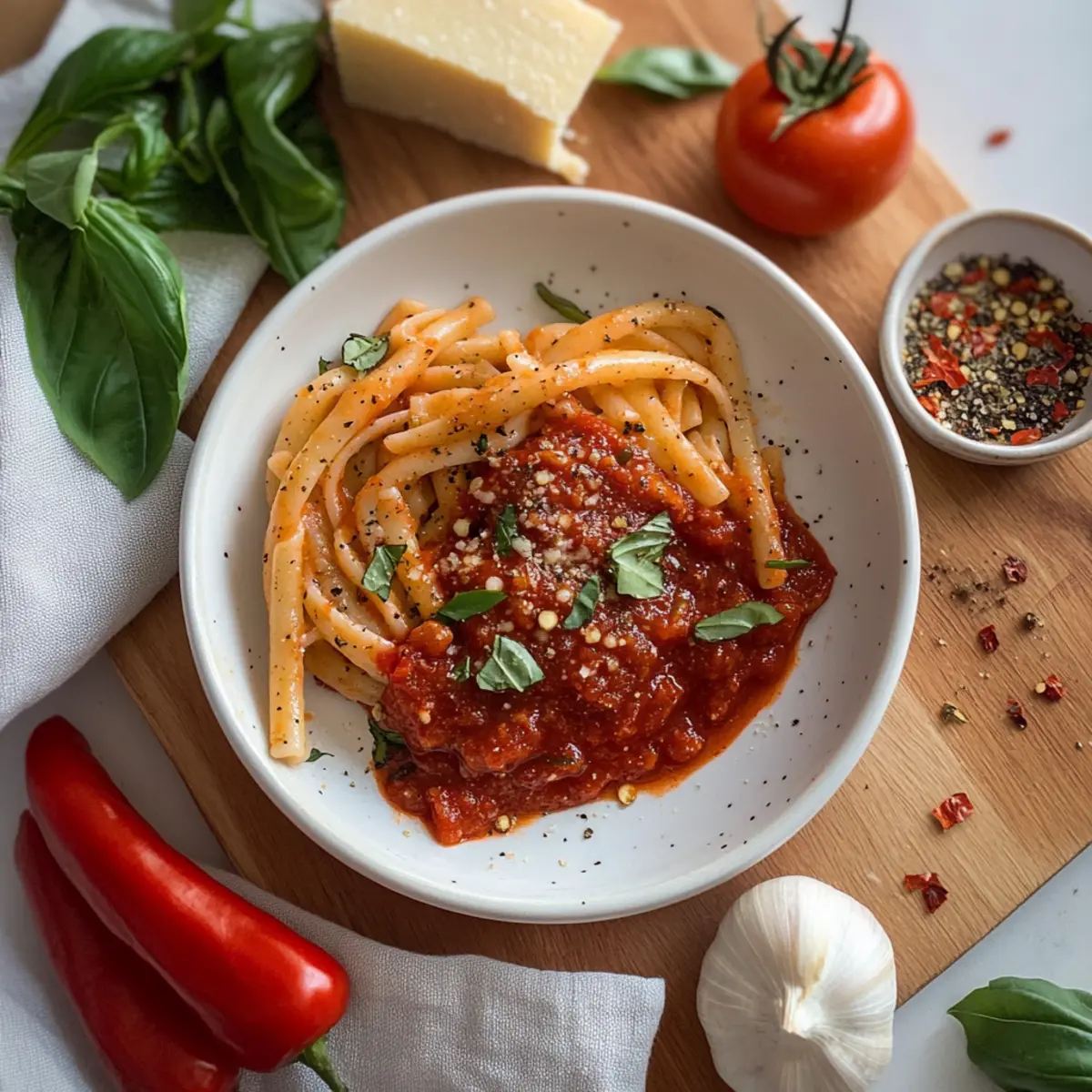
Spice Up Dinner with This Easy Arrabbiata Sauce Recipe
Ingredients
Equipment
Method
- Heat ¼ cup of extra virgin olive oil in a large skillet over medium heat until shimmering, about 2 minutes. Add 4 minced garlic cloves and 1 teaspoon of red pepper flakes. Sauté for 1 minute until fragrant.
- Pour in a 28-ounce can of crushed tomatoes, ½ teaspoon of dried oregano, ¼ teaspoon of salt, and ¼ teaspoon of black pepper. Stir to combine and bring to a gentle simmer.
- Reduce heat to low and let the sauce simmer uncovered for 15 to 20 minutes, stirring occasionally until thickened.
- Taste the sauce and adjust seasonings. Add a pinch of sugar if too acidic and some chopped fresh basil if desired.
- Serve over pasta, coating the noodles beautifully, and garnish with grated Parmesan cheese or fresh basil before enjoying.
Leave a Reply