
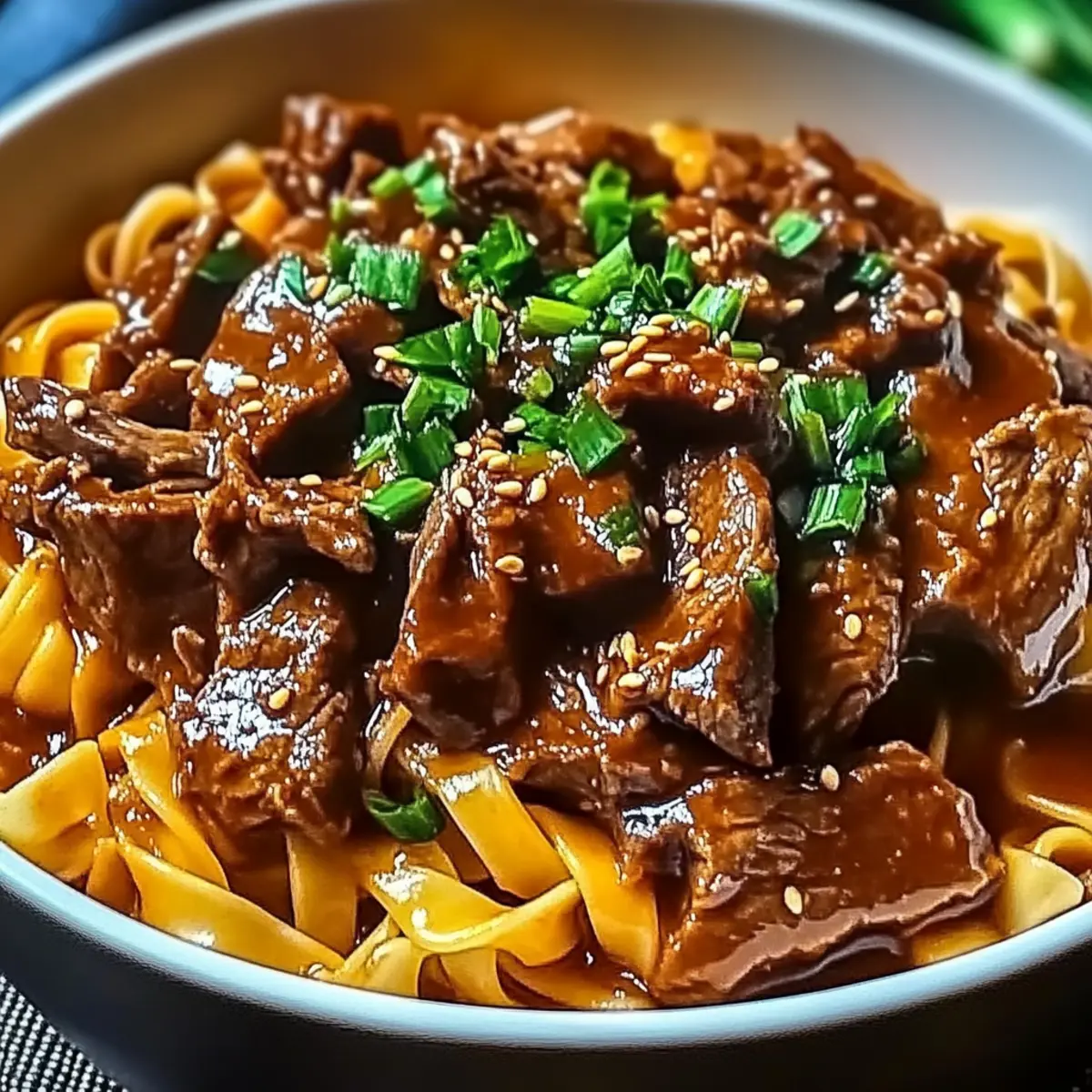
As I stirred the bubbling pot, a wave of aromatic ginger and garlic enveloped my kitchen—everyone needs a comforting embrace now and then, especially when it comes from a bowl of Slow Cooker Korean Beef Noodles. This dish is a true crowd-pleaser, showcasing tender beef that practically melts in your mouth, steeped in a savory soy-based broth that dances with vibrant flavors. The best part? It’s both easy to make and perfect for busy weeknights, allowing you to whip up a satisfying meal without the stress. With minimal prep, you can set your slow cooker and let it work its magic while you go about your day. Are you ready to fill your home with enticing scents and enjoy a hearty meal that will satisfy your cravings? Let’s dive into this delightful recipe!

Why Are Korean Beef Noodles So Irresistible?
Unmatched Comfort: There’s nothing quite like a warm bowl of Slow Cooker Korean Beef Noodles to melt away the stress of the day. This dish balances flavors so beautifully, you’ll find yourself craving it again and again.
Simplicity to Savor: With just a few ingredients and hands-off cooking, you can have a hearty meal ready when you are, making it ideal for busy weeknights or lazy weekends.
Endless Versatility: From adding fresh vegetables to swapping out for chicken thighs, personalize this dish to suit your taste. And if you’re a fan of noodles, you’ll love experimenting with variations like zucchini noodles for a low-carb alternative.
Flavor Explosion: The rich soy-based broth infused with ginger and garlic creates a depth of flavor that dances on your palate, while the tender beef practically melts in your mouth.
Perfect for Sharing: Whether you’re serving family or hosting friends, this recipe is sure to impress—a comforting bowl of goodness that brings everyone together and keeps them coming back for seconds! Plus, if you’re looking for more delicious ideas, don’t miss out on exploring Garlic Chicken Noodles for a delightful twist.
Korean Beef Noodles Ingredients
For the Beef
- Beef Chuck – Choose well-marbled cuts for the most tender, melt-in-your-mouth experience.
- Black Pepper – Provides a mild heat; adjust to your personal taste for a little kick.
For the Broth
- Beef Broth – Adds deep flavor; consider low-sodium versions to manage salt levels.
- Water – Helps balance the consistency of the broth for a rich experience.
- Soy Sauce – The backbone of umami flavor; low-sodium versions are a great alternative.
- Brown Sugar – Balances savory notes; can be swapped with honey or maple syrup for a different sweetness.
- Ginger (minced) – Fresh ginger imparts warmth; hold the flavor longer by using fresh over dried.
- Garlic (minced) – Elevates the aroma and savory profile; garlic powder can work in a pinch.
- Sesame Oil – A nutty accent to the dish; opt for toasted sesame oil for extra brightness.
- Gochujang (Korean chili paste) – Adds a kick of heat and richness; use less for a milder experience.
For the Noodles
- Noodles (fresh or dried, such as udon or ramen) – Choose your favorite for texture; rice noodles are a gluten-free option.
For Garnishing
- Green Onions (sliced) – Adds a crisp freshness; chives work as a substitute if needed.
- Sesame Seeds – Optional topping for added crunch and flavor; sprinkle them on just before serving.
- Fresh Cilantro – Enhances the dish with brightness; can swap with parsley if you prefer.
Feel the excitement build as you gather these ingredients to whip up your own comforting bowl of Korean Beef Noodles!
Step‑by‑Step Instructions for Korean Beef Noodles
Step 1: Prepare the Beef
Begin by taking the beef chuck and cutting it into bite-sized chunks. Season the pieces generously with black pepper, ensuring each piece is well-coated. This step is crucial for enhancing the flavor of your Korean Beef Noodles, so take a moment to make sure the seasoning is even.
Step 2: Mix the Sauce
In a large mixing bowl, combine the beef broth, soy sauce, brown sugar, minced ginger, minced garlic, sesame oil, and gochujang. Whisk the ingredients together until the brown sugar has completely dissolved, creating a smooth and flavorful sauce. The aroma will start to fill your kitchen, hinting at the delicious meal ahead.
Step 3: Place in Slow Cooker
Add the seasoned beef chunks to your slow cooker, spreading them out for even cooking. Pour the prepared sauce over the beef, making sure it covers the pieces thoroughly. This ensures that the flavors of the Korean Beef Noodles will penetrate the meat during the cooking process.
Step 4: Cook
Cover your slow cooker and set it to low for 6 to 8 hours or high for 3 to 4 hours. Check the beef occasionally if possible, but avoid lifting the lid too often, as it can interrupt the cooking temperature. The beef should be fork-tender when done, soaking up all that wonderful sauce.
Step 5: Prepare Noodles
About 15 to 20 minutes before you plan to serve your Korean Beef Noodles, bring a large pot of water to a boil. Cook the noodles—using udon or ramen—as per the package instructions. Drain them well, ensuring they’re ready to absorb the rich flavors of your beef mixture.
Step 6: Combine
Once your beef is tender, gently add the cooked noodles to the slow cooker. Stir everything together, allowing the noodles to soak up the delicious broth and flavors from the beef. This step transforms your dish into a hearty and comforting bowl of Korean Beef Noodles that’s visually inviting.
Step 7: Serve
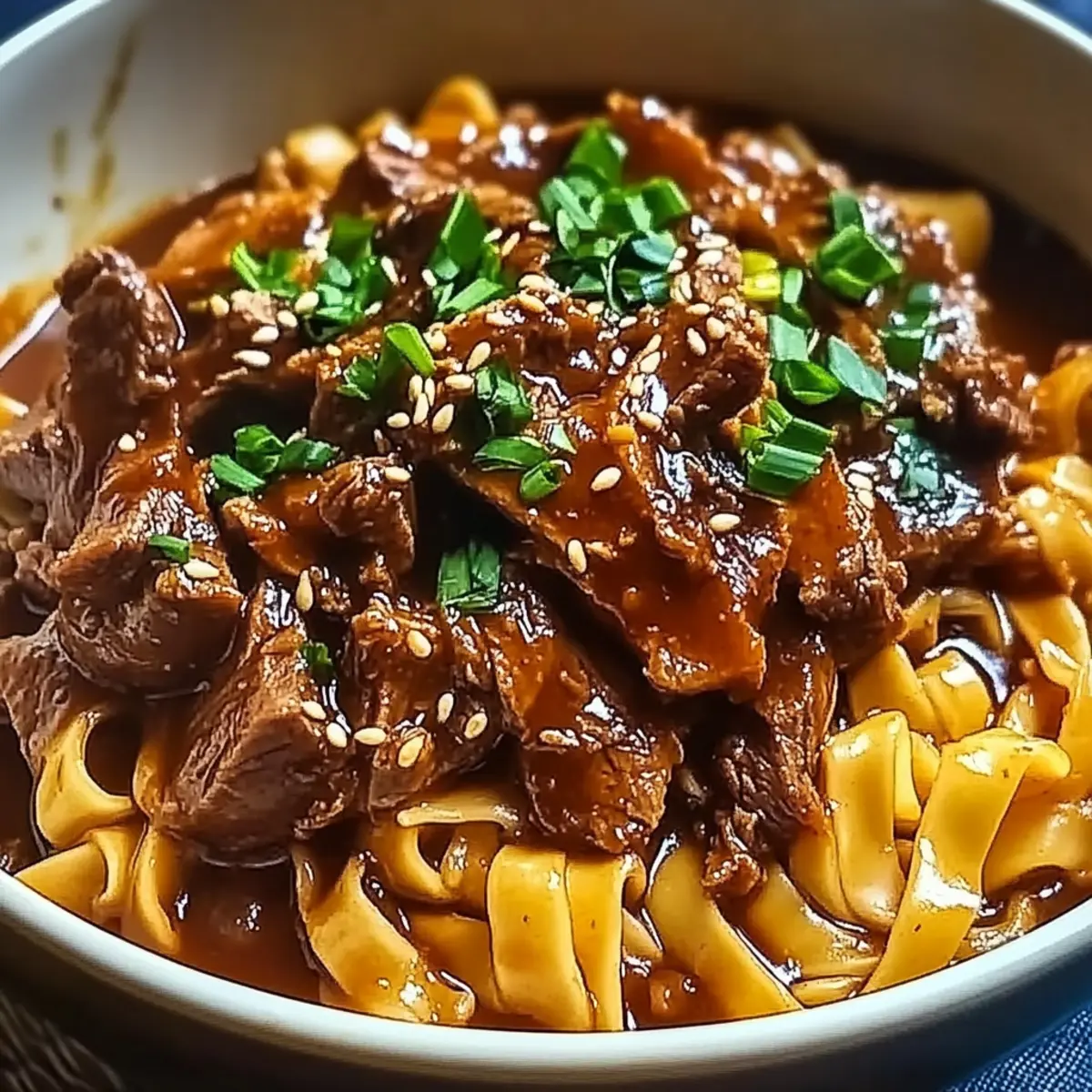
Ladle the beef and noodle mixture into bowls, making sure to include plenty of the savory broth. Garnish each serving with sliced green onions, a sprinkle of sesame seeds, and fresh cilantro for a burst of color and flavor. Enjoy the warmth of your homemade Korean Beef Noodles with loved ones!

What to Serve with Korean Beef Noodles?
Transform your delicious Slow Cooker Korean Beef Noodles into a full meal with these enticing sides that are sure to please everyone at the table.
- Crusty Bread: Perfect for soaking up the rich, savory broth and enhancing the comforting experience.
- Kimchi: This spicy, tangy side adds a refreshing crunch, balancing the richness of the noodles and beef.
- Steamed Broccoli: Vibrant green florets provide a nutritious and crunchy contrast, brightening the overall dish with freshness.
- Asian Slaw: A mixture of cabbage, carrots, and sesame dressing serves as a crunchy and crisp side that complements the warm noodles beautifully.
- Sesame Spinach Salad: Lightly dressed in soy and sesame oil, this salad adds a nutty flavor with a healthy touch, perfect alongside the hearty noodles.
- Pickled Cucumbers: Their mirin-infused sweetness and tanginess offer a delightful counterpoint to the rich flavors, enhancing each bite of beef and noodles.
- Green Tea: For a soothing drink, the subtle earthiness of green tea complements the dish without overpowering it.
- Mango Sticky Rice: For dessert, this sweet and creamy treat provides a lovely contrast to the savory main course, ending the meal on a delightful note.
Expert Tips for Korean Beef Noodles
-
Brown the Beef: Enhancing flavor by searing the beef chunks before slow cooking results in a more robust taste for your Korean Beef Noodles.
-
Adjust Spice Levels: Tailor your dish by varying the amount of gochujang used. Taste as you go to find your perfect heat level.
-
Cook Noodles Separately: To prevent mushy noodles, prepare them just before serving. They will hold their texture better that way.
-
Lid Lifting Caution: Avoid lifting the slow cooker lid too often; doing so can release heat and extend cooking time, affecting the final dish.
-
Substitutions and Variations: Don’t hesitate to swap beef chuck for chicken thighs or add veggies like bell peppers to customize your Korean Beef Noodles.
How to Store and Freeze Korean Beef Noodles
Fridge: Store leftovers in an airtight container for up to 4 days. Make sure the noodles are well mixed with the beef and broth to keep them moist.
Freezer: Freeze Korean Beef Noodles in portions in airtight containers or freezer bags for up to 3 months. To prevent freezer burn, ensure all air is removed when sealing.
Reheating: Reheat leftovers on the stovetop over medium heat, adding a splash of beef broth or water to rehydrate the noodles and broth as needed.
Airtight Storage: If storing for later, keep beef and noodles separate if possible to maintain the best texture, especially for freezing.
Korean Beef Noodles Variations & Substitutions
Feel free to get creative—there’s plenty of room to customize these comforting Korean Beef Noodles to suit your personal taste!
-
Chicken Thighs: Substitute beef chuck with chicken thighs for a lighter yet equally delicious option. The tender chicken soaks up the savory broth beautifully.
-
Zucchini Noodles: Swap out regular noodles for zucchini noodles to make this dish low-carb. They add a fresh crunch and absorb the flavorful broth.
-
Veggie Boost: Toss in bell peppers, carrots, or snap peas for an added dose of nutrition. Not only do they enhance flavor, but they also bring vibrant color to your bowl!
-
Flavorful Broth: Use homemade beef broth or add a splash of vinegar for tanginess. This twist can elevate the depth of flavor and make each bite more exciting.
-
Spice It Up: Use more gochujang or add fresh chilies for a bolder kick. For those who enjoy heat, don’t hold back—the spice will harmonize perfectly with the savory components.
-
Rice Noodles: For a gluten-free option, swap traditional noodles with rice noodles, providing a delicate texture that complements the dish beautifully.
-
Mushroom Medley: Add shiitake or portobello mushrooms to the slow cooker for an earthy flavor boost. They absorb the broth and contribute a delightful umami taste.
-
Fresh Herbs: Change the garnish with fresh Thai basil or mint instead of cilantro. This small swap can completely transform the aroma and flavor profile of your dish.
Feeling inspired? You can explore how to enhance flavors further with dishes like Garlic Chicken Noodles or try a new aspect of flavor with Chilli Beef Flavor. The possibilities are endless!
Make Ahead Options
These Korean Beef Noodles are a great meal prep option for busy home cooks! You can season the beef and prepare the sauce up to 24 hours in advance; simply store them in separate airtight containers in the refrigerator. When you’re ready to cook, just add the seasoned beef and sauce to your slow cooker and follow the regular cooking steps. Additionally, you can cook the noodles up to 3 days ahead; just make sure to toss them in a bit of oil to prevent sticking, then refrigerate. When it’s time to serve, combine the cooked noodles with the beef mixture in the slow cooker for a satisfying, warming meal that’s just as delicious and comforting!
Korean Beef Noodles Recipe FAQs
How do I select the right beef for Korean Beef Noodles?
Absolutely! When choosing beef chuck for your Korean Beef Noodles, look for well-marbled cuts. The marbling indicates that the meat will remain tender and flavorful during the slow cooking process. If possible, opt for cuts that have a deep red color and a bit of fat for extra juiciness.
How should I store my leftover Korean Beef Noodles?
Leftovers can be stored in an airtight container in the refrigerator for up to 4 days. Make sure to mix the noodles gently with the beef and broth to keep them moist and flavorful. If you notice the noodles becoming too dry, a splash of water or broth during reheating can help them regain their delightful texture.
Can I freeze Korean Beef Noodles, and how?
Yes, indeed! To freeze your Korean Beef Noodles, first cool them completely. Then, portion them into airtight containers or freezer bags, making sure to remove as much air as possible to prevent freezer burn. They’ll be good for up to 3 months. When you’re ready to enjoy a comforting bowl again, thaw them overnight in the fridge and reheat gently on the stovetop, adding a splash of beef broth if needed.
What should I do if my beef is tough after cooking?
If you find that your beef isn’t as tender as you’d like after cooking, it may need more time in the slow cooker. If possible, try returning the beef to the slow cooker, adding a bit of additional liquid (like beef broth), and cooking for another hour. This allows the collagen to break down further, resulting in more tender, flavorful meat.
Are there any dietary considerations I should keep in mind?
Very much so! If you’re cooking for someone with gluten sensitivities, opt for gluten-free soy sauce or tamari when preparing your Korean Beef Noodles. Additionally, check that your noodles are also gluten-free, such as rice noodles. If you’re accommodating food allergies, always verify the ingredient labels for sauces and pastes to ensure they’re allergen-free.
Can I customize the noodle type for this recipe?
Definitely! While traditional udon or ramen noodles work wonderfully, feel free to experiment with different types such as rice noodles for a gluten-free option or zucchini noodles for a low-carb alternative. Cooking times may vary, so be mindful of adjusting the cook time based on the noodle type you choose.
Irresistible Korean Beef Noodles That Comfort Your Soul
Ingredients
Equipment
Method
- Begin by taking the beef chuck and cutting it into bite-sized chunks. Season generously with black pepper.
- In a large mixing bowl, combine the beef broth, soy sauce, brown sugar, minced ginger, minced garlic, sesame oil, and gochujang. Whisk until the brown sugar is dissolved.
- Add the seasoned beef chunks to your slow cooker and pour the prepared sauce over the beef, ensuring it covers the pieces thoroughly.
- Cover and set the slow cooker to low for 6 to 8 hours or high for 3 to 4 hours.
- About 15 to 20 minutes before serving, bring a large pot of water to a boil. Cook the noodles according to the package instructions and drain well.
- Once the beef is tender, gently add the cooked noodles to the slow cooker and stir everything together, allowing the noodles to soak up the broth.
- Ladle the mixture into bowls, garnishing with green onions, sesame seeds, and cilantro. Enjoy!
Leave a Reply