
As I stood in my kitchen, a vibrant bundle of asparagus caught my eye, whispering a promise of springtime goodness. That’s when I decided to whip up a comforting bowl of Spring Asparagus and Potato Chowder. This recipe is more than just a dish—it’s a delicious embrace that celebrates the season’s fresh flavors. With its creamy yet light texture, the chowder is not only quick to prepare but also easily adaptable, allowing for dairy-free and vegan variations that everyone can enjoy. Whether you’re cozying up on a chilly evening or looking for a bright twist to your dinner table, this chowder offers the perfect balance of nourishing warmth and seasonal zest. Curious to learn how to create this comforting delight in your own kitchen? Let’s dive in!
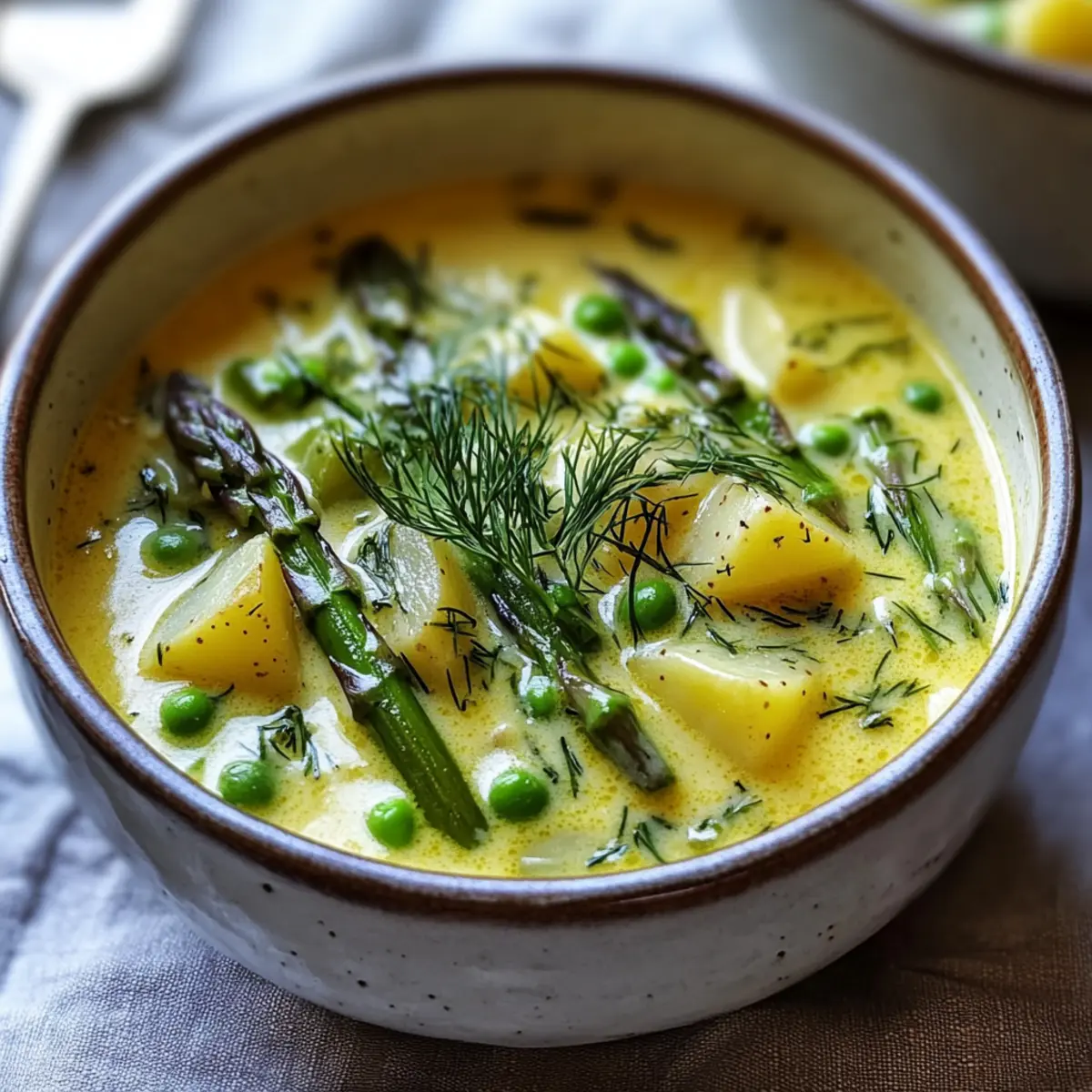
Why is this chowder a must-try?
Freshness at Its Finest: This Spring Asparagus and Potato Chowder captures the essence of spring with its vibrant ingredients, like tender asparagus and sweet peas, ensuring each spoonful tastes like sunshine.
Versatile Comfort: Easily adaptable for dietary needs, you can enjoy this chowder as a creamy delight or a dairy-free treat, making it perfect for everyone at the table.
Quick & Simple: With straightforward steps, this recipe can be on your table in no time, perfect for those busy weeknights or as a relaxed weekend treat.
Make-Ahead Marvel: Ideal for meal prep, this chowder actually improves in flavor overnight, so you can enjoy leftovers that are even more delicious! Try pairing it with some homemade Savory Sweet Potato for an extra comfort boost!
Nourishing & Satisfying: Packed with wholesome ingredients, this chowder not only warms your heart but also nourishes your body—perfect for keeping that springtime energy up!
Spring Asparagus and Potato Chowder Ingredients
Get ready to savor a bowl of spring!
For the Chowder
- Leeks – A flavor base that develops sweetness when slow-cooked; onions can be a quick substitute.
- Onions – Adds depth to the chowder; shallots can replace them for a milder touch.
- Shallots – Offers a hint of sweetness and complexity; feel free to omit if desired.
- Garlic – Enhances aroma and flavor; fresh cloves are best, but garlic powder works in a pinch.
- Yukon Gold Potatoes – These are creamy and give texture; red potatoes can be swapped for a firmer bite.
- Asparagus – The star of the chowder; for the freshest flavor, choose vibrant green stalks!
- Sweet Peas – Adds a touch of sweetness; if fresh ones aren’t available, frozen peas will do just fine.
- Dill – Provides a lovely herbal accent; chives or parsley can be used if dill is missing.
- Heavy Cream – Offers richness; coconut milk is a great dairy-free substitute for a similar texture.
- Vegetable Broth – This serves as the soup’s base; opt for homemade or low-sodium store-bought broth for best flavor.
- Salt & Pepper – Essential for balancing your chowder’s flavors; adjust to your taste preferences.
Step‑by‑Step Instructions for Spring Asparagus and Potato Chowder
Step 1: Sauté Aromatics
In a large pot over medium heat, add a splash of olive oil and then slowly sauté chopped leeks, onions, shallots, and minced garlic for about 10 minutes. Stir occasionally until they become soft and translucent, releasing their sweet aromas. This step builds a rich flavor base for your Spring Asparagus and Potato Chowder.
Step 2: Cook Potatoes
Next, add diced Yukon Gold potatoes to the pot along with vegetable broth, ensuring that there’s enough liquid to cover the ingredients. Bring this mixture to a simmer over medium-high heat, then reduce to low and cook for approximately 20 minutes. The potatoes should be tender when pierced with a fork, creating a creamy consistency for your chowder.
Step 3: Add Asparagus and Peas
Once the potatoes are tender, stir in chopped asparagus and sweet peas. Continue to cook the chowder for another 5 minutes, ensuring the asparagus stays vibrant and just tender. This infusion of green adds a fresh touch to your Spring Asparagus and Potato Chowder, enhancing both flavor and texture.
Step 4: Mash for Thickness
To thicken the chowder, take a fork or a potato masher and gently mash some of the cooked potatoes against the sides of the pot. This will create a creamier base while still maintaining some chunky bits for texture. It’s the secret to achieving that perfect consistency in your comforting chowder.
Step 5: Incorporate Cream and Dill
Reduce the heat to low and stir in your choice of heavy cream or coconut milk for a dairy-free version. Add fresh dill, stirring until everything is well combined. Cook for an additional 2 minutes just to warm through the chowder and let those flavors meld beautifully together.
Step 6: Season and Serve
Finally, season your Spring Asparagus and Potato Chowder with salt and pepper to taste. Adjust the seasoning as needed to achieve a balanced flavor. Ladle the chowder into bowls and serve hot, perhaps alongside some crusty bread or a refreshing salad to round out this nourishing meal.
Make Ahead Options
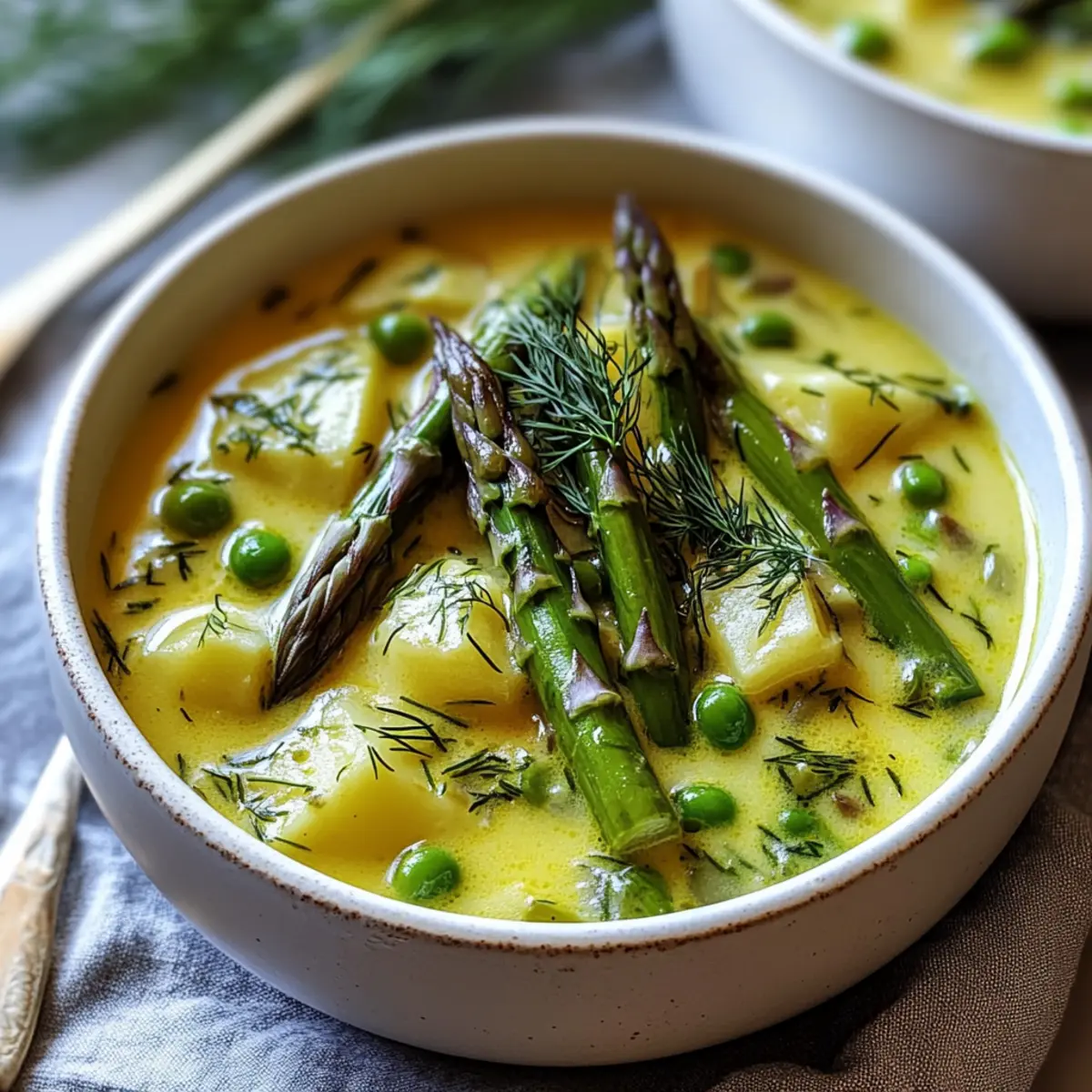
These Spring Asparagus and Potato Chowder preparations are perfect for busy home cooks! You can chop the leeks, onions, shallots, and garlic and store them in an airtight container in the refrigerator for up to 3 days, as this will save time on your cooking day while flavoring the soup. Additionally, you can dice the Yukon Gold potatoes and submerge them in water (to prevent browning) for up to 24 hours. When you’re ready to enjoy the chowder, simply sauté the aromatics as directed, add the broth and potatoes, and finish by stirring in the asparagus, peas, and cream. This way, you’ll have a hearty, wholesome meal that’s just as delicious with minimal effort!
How to Store and Freeze Spring Asparagus and Potato Chowder
Fridge: Store leftovers in an airtight container for up to 4 days. Reheat gently on low heat, stirring occasionally, to maintain the chowder’s creamy texture.
Freezer: For longer storage, freeze your Spring Asparagus and Potato Chowder without the cream for up to 3 months. Add the cream back in when reheating to restore its richness.
Thawing: When ready to enjoy, thaw overnight in the fridge and then reheat gently on the stove until warm. Avoid boiling to keep your chowder creamy.
Make-Ahead: Feel free to prepare this chowder in advance; it tastes even better the next day as the flavors meld beautifully overnight.
What to Serve with Spring Asparagus and Potato Chowder
Enjoying a bowl of this creamy, comforting chowder is just the beginning; let’s explore delightful pairings that elevate your meal.
-
Crusty Bread: Perfect for dipping, a slice of fresh, crusty bread is ideal for soaking up every drop of chowder’s velvety goodness.
-
Garlic Toast: The buttery and crispy texture complements the creaminess of the chowder while infusing a deliciously aromatic twist.
-
Green Salad: A crisp green salad with a zesty lemon vinaigrette adds a refreshing crunch that beautifully offsets the chowder’s richness.
-
Roasted Vegetables: Seasoned and caramelized veggies bring a delightful earthiness, enhancing the meal’s depth while keeping the flavors vibrant.
-
Cheesy Biscuits: Fluffy, cheesy biscuits are a comforting indulgence, providing a savory contrast to the lighter aspects of the chowder.
-
Fruit Salad: A light, sweet fruit salad offers a bright burst of flavors, balancing the savory notes of the chowder with a hint of freshness.
-
Sparkling Water: A bubbly sipper, sparkling water enhances the meal without overshadowing the chowder’s subtle flavors, making it a perfect pairing.
-
Dessert Muffins: Whip up some blueberry or lemon muffins as a sweet finish; their softness and sweetness are a lovely end to this comforting dish.
-
Chardonnay: A chilled glass of Chardonnay adds a rich and fruity depth to the experience, enhancing the meal while being delightfully refreshing.
Spring Asparagus and Potato Chowder Variations
Feel free to sprinkle your own magic into this chowder, customizing it to suit your taste buds!
-
Vegan Delight: Replace heavy cream with full-fat coconut milk for a creamy vegan alternative that’s just as luscious.
-
Protein Boost: Stir in white beans or chickpeas for added protein; they’ll also enhance the chowder’s texture and heartiness.
-
Spicy Kick: Add a pinch of red pepper flakes for a touch of heat, or top with fresh basil for a fragrant twist.
-
Herb Infusion: Experiment with additional herbs like thyme or tarragon; these can elevate the flavor profile beautifully.
-
Flavor Twist: Incorporate a splash of white wine while cooking for a depth of flavor that complements the freshness of the vegetables.
-
Make it Chunky: Leave some potato chunks unmashed for a heartier texture, creating delightful surprises in each bite.
-
Meal Prep Wonder: Make a bigger batch and serve alongside dishes like Crockpot Garlic Potatoes or some savory sides for easy weekday lunches.
-
Frozen Favorites: If you find yourself with leftover asparagus, toss it in! Just ensure to add it towards the end of cooking to keep its vibrant color intact.
Expert Tips for Spring Asparagus and Potato Chowder
- Sauté Slowly: Take your time with the leeks, onions, shallots, and garlic. Slow cooking brings out natural sugars, enhancing the flavor of your chowder.
- Perfectly Tender Asparagus: Avoid overcooking the asparagus to keep its vibrant green color and crunchy texture. Add it in the last few minutes of cooking.
- Taste as You Go: Adjust seasoning throughout the cooking process, ensuring your Spring Asparagus and Potato Chowder achieves just the right flavor balance.
- Leftover Storage: Store the chowder in an airtight container for up to four days. Reheat gently over low heat to maintain its creamy texture.
- Freezing Tips: For best results, omit cream before freezing. Add it back in when reheating for a fresh, creamy texture.
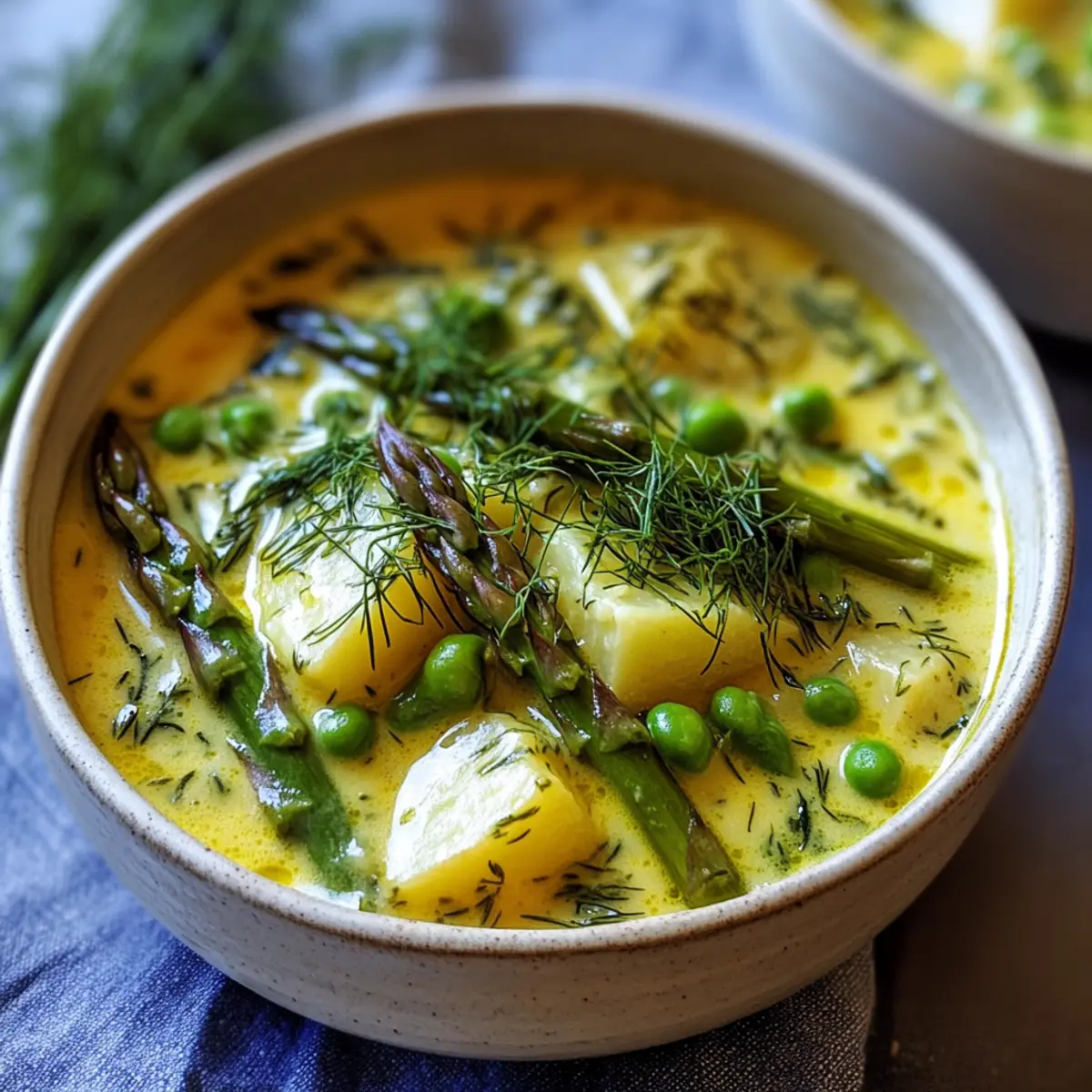
Spring Asparagus and Potato Chowder Recipe FAQs
How do I choose the best asparagus for my chowder?
Absolutely! Look for fresh asparagus with firm, bright green stalks and closed tips. Avoid any with dark spots or a wilting appearance, as these are signs of age. If you can snap a stalk easily, it’s fresh and perfect for your chowder.
What are the best storage methods for leftover chowder?
Very good question! Store your Spring Asparagus and Potato Chowder in an airtight container in the fridge for up to 4 days. When reheating, gently warm it on low heat while stirring occasionally to keep that creamy texture intact—you want a nice velvety chowder, after all!
Can I freeze this chowder, and how do I do it properly?
Yes, you can absolutely freeze it! To ensure the best quality, omit the heavy cream before freezing. Pour the chowder into airtight containers, leaving some space for expansion, and freeze for up to 3 months. When ready to enjoy, thaw it overnight in the fridge, reheat gently on the stove, and then stir in the cream for that perfect creamy finish!
What should I do if my chowder is too thick?
If your chowder turns out thicker than you’d like, don’t worry! Simply add a bit more vegetable broth or water while reheating to reach your desired consistency. Stir well, and let it simmer for a few minutes until everything is warmed through. Remember, it’s all about finding that perfect balance!
Are there any allergy considerations for this chowder?
Definitely! While the base recipe is quite versatile, be mindful if anyone at your dining table has dairy allergies. Opt for coconut milk or cashew cream as a substitute for the heavy cream to keep it dairy-free. Additionally, check that your vegetable broth is free of gluten if that’s a concern, as some store-bought varieties may contain it.
Can I make this chowder vegan?
Of course! For a delightful vegan adaptation, just replace the heavy cream with full-fat coconut milk or cashew cream. It’ll give you that creamy texture while still keeping the chowder plant-based and delicious. You can also add in white beans or chickpeas for an extra protein boost!
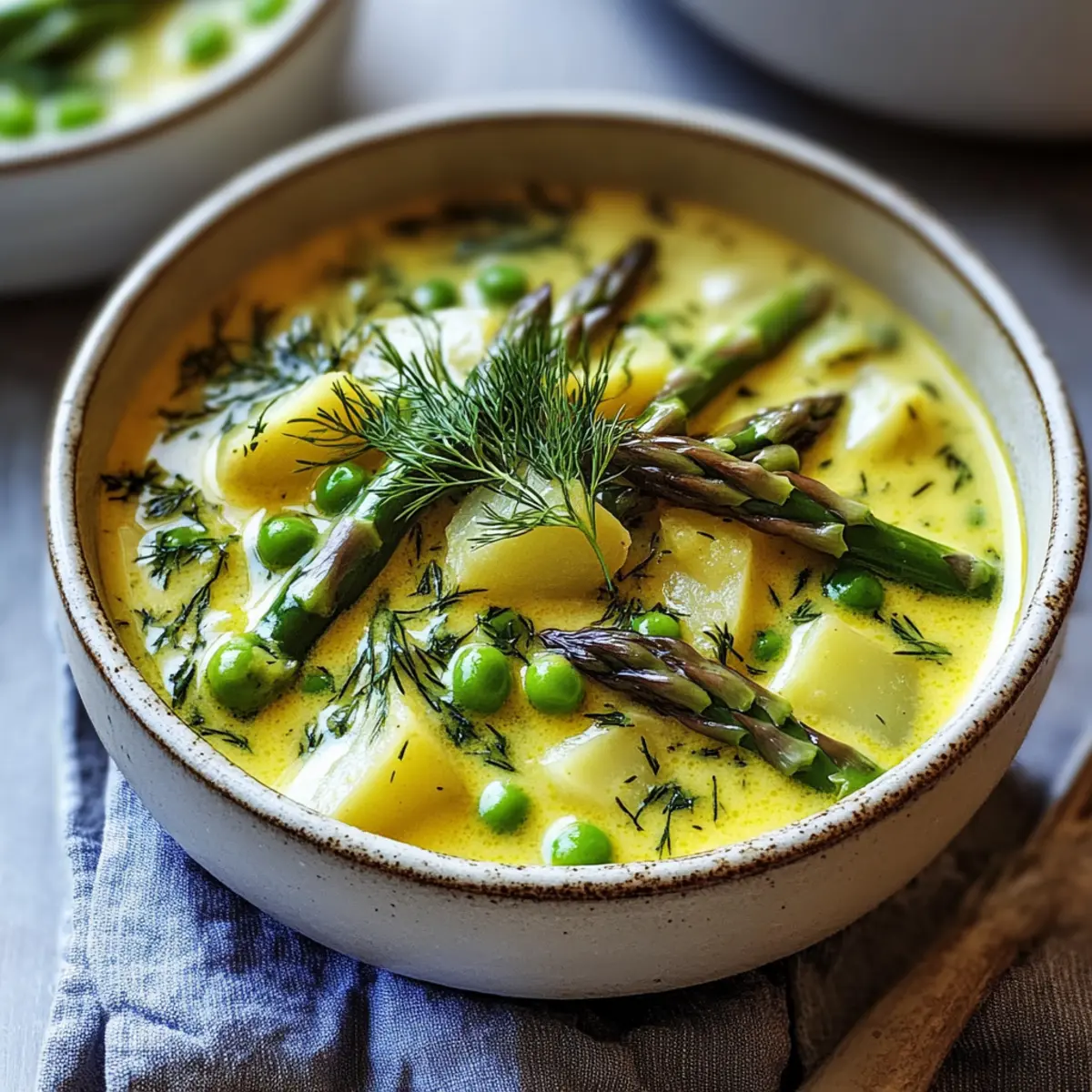
Spring Asparagus and Potato Chowder for Cozy Comfort Moments
Ingredients
Equipment
Method
- In a large pot over medium heat, add a splash of olive oil and slowly sauté chopped leeks, onions, shallots, and minced garlic for about 10 minutes until soft.
- Add diced Yukon Gold potatoes and vegetable broth to the pot, ensuring enough liquid covers the ingredients. Bring to a simmer over medium-high heat and then reduce to low. Cook for about 20 minutes until potatoes are tender.
- Stir in chopped asparagus and sweet peas and cook for another 5 minutes, keeping the asparagus vibrant and just tender.
- Gently mash some of the cooked potatoes against the pot's sides with a fork or masher to thicken the chowder.
- Reduce the heat to low and stir in heavy cream or coconut milk and fresh dill. Cook for an additional 2 minutes to warm through.
- Season with salt and pepper to taste. Ladle into bowls and serve hot with crusty bread or a salad.
Leave a Reply